

A well organized home can make everyday life feel calmer, easier, and more comfortable. When everything has a proper place, you spend less time looking for things and more time enjoying your surroundings. The good news is that creating an organized home does not always require expensive furniture, a large renovation, or extra rooms. With a few simple storage ideas, even a small home can become more practical and pleasant to live in.
I have always found that good organization begins with understanding how we actually use our belongings. Storage should not simply hide clutter. It should make useful things easier to reach and help every room function better. The best storage solutions are usually the simplest ones because they fit naturally into daily routines.
If you want to create a cleaner and more peaceful living environment, these simple storage ideas for a more organized home can help you make better use of the space you already have.
Start by Removing Things You No Longer Need
Before buying storage boxes, shelves, or cabinets, take some time to look at what you already own. Many homes feel short on storage simply because too many unnecessary items are taking up useful space.
Go through one room at a time. Look at clothes, books, kitchen tools, decorations, old papers, toys, and other household items. Think about whether you still use each item and whether it deserves space in your home.
Things that are damaged and cannot be repaired can be discarded responsibly. Items that are still useful but no longer needed can be donated or given to someone who can use them.
Removing unnecessary belongings makes organizing much easier. You may discover that you already have enough storage once unused items are gone.
Make Better Use of Vertical Space
Walls often provide valuable storage space that people overlook. If your floor space is limited, look upward.
Wall shelves are useful in living rooms, bedrooms, bathrooms, kitchens, and home offices. They can hold books, baskets, plants, photographs, kitchen supplies, and many other items.
Tall shelving units are another practical option because they provide more storage without using much additional floor space. In smaller rooms, choosing tall furniture instead of wide furniture can make a noticeable difference.
The upper sections of wardrobes and cabinets can also be used for items that are not needed every day. Storage baskets or labeled containers can keep these areas neat.
Using vertical space helps free the floor and can make a room feel more open.
Use Baskets to Control Everyday Clutter
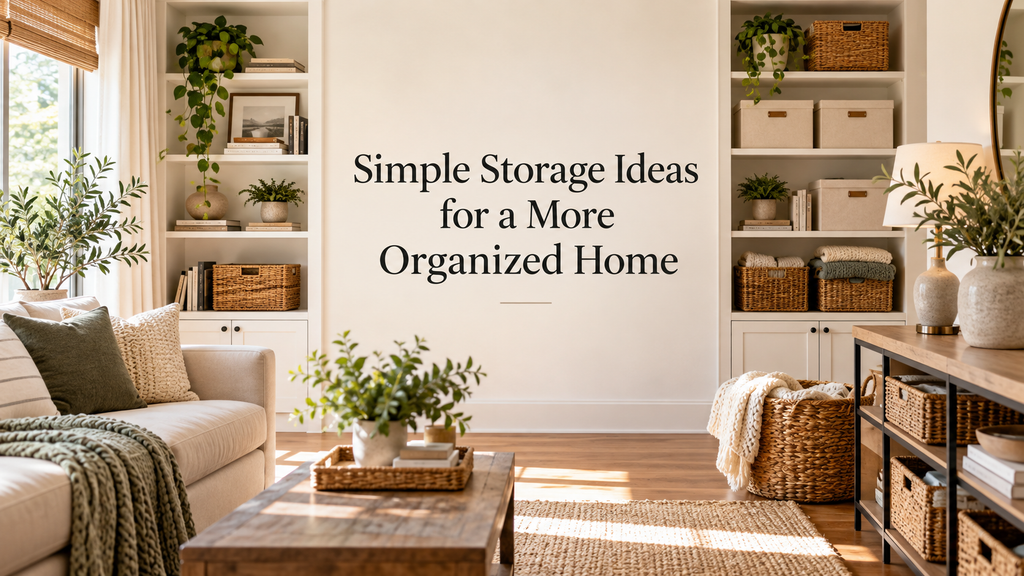
Baskets are one of the easiest storage solutions for almost any home. They are useful because they can collect several small objects in one place while keeping the room looking tidy.
In the living room, a basket can hold blankets, magazines, remote controls, or children’s toys. In the bathroom, baskets can organize towels, toiletries, and cleaning products. In the bedroom, they can store accessories, extra bedding, or clothes.
Try choosing baskets that fit the style of your room. Natural woven baskets can create a warm appearance, while simple fabric or plastic baskets may work better inside cupboards and wardrobes.
The main purpose is to give everyday items a clear home.
Create Storage Under the Bed
The area underneath a bed is often wasted, especially in smaller bedrooms. It can provide a surprising amount of hidden storage.
Flat storage containers can be used for seasonal clothes, extra sheets, shoes, blankets, books, or other items that are not used daily.
If you are buying a new bed, consider choosing one with built in drawers or storage space underneath. This can reduce the need for additional cabinets in the bedroom.
Keep items inside closed containers whenever possible. This protects them from dust and makes the space easier to maintain.
Under bed storage works particularly well for items you want to keep but do not need to see every day.
Organize Kitchen Cabinets Carefully
A kitchen can quickly become cluttered because it contains many different types of items. Plates, glasses, food containers, cooking tools, spices, and cleaning supplies all need proper storage.
Start by grouping similar items together. Keep baking supplies in one area, spices in another, and everyday cooking tools close to where you prepare food.
Shelf organizers can help create additional levels inside cabinets. Small containers are useful for organizing packets and ingredients that might otherwise become lost at the back.
Frequently used items should be easy to reach. Things used only occasionally can be placed on higher shelves.
Good kitchen organization can save time every day because you know exactly where everything belongs.
Use Drawer Dividers
Large drawers can become messy when small items are placed inside without any structure. Drawer dividers create separate spaces for different objects.
They are useful for kitchen utensils, office supplies, makeup, bathroom products, socks, accessories, and many other household items.
You do not necessarily need expensive organizers. Small boxes or containers can also divide a drawer effectively.
The important thing is to separate items into simple categories. When everything has a section, it becomes easier to put things away after using them.
This small habit can prevent drawers from turning into cluttered spaces.
Add Hooks in Useful Places
Hooks are simple, inexpensive, and extremely useful for home organization. They can turn empty wall or door space into practical storage.
Place hooks near the entrance for coats, handbags, keys, umbrellas, or reusable shopping bags. Bathroom hooks can hold towels and robes. Bedroom hooks can store hats, scarves, or frequently worn clothes.
Hooks can also be installed inside cabinet doors for lightweight items.
Think about where objects usually get dropped around your home. Adding a hook nearby may provide an easy solution.
The best storage ideas often work because they make putting things away almost effortless.
Improve Storage Around the Entrance
The entrance is one of the first places where clutter can appear. Shoes, bags, keys, letters, and other everyday belongings are often left near the door.
A small shoe rack can immediately make the area feel more organized. Add hooks for bags and jackets and use a small tray or bowl for keys.
If space allows, a narrow console table with drawers can provide useful storage without making the entrance feel crowded.
You can also place a basket nearby for items that need to be taken outside, such as returns, shopping bags, or packages.
Creating a simple entrance storage system prevents clutter from spreading into the rest of the home.
Choose Furniture With Hidden Storage
Furniture can serve more than one purpose. Choosing pieces that include storage is especially helpful in smaller homes.
An ottoman with internal storage can hold blankets, games, toys, or magazines. A coffee table with drawers can hide remote controls and other small items. Benches with storage compartments are useful in bedrooms, hallways, and entrances.
Even some sofas and beds include hidden storage areas.
Furniture with storage allows you to keep necessary belongings nearby without leaving them visible. It can help maintain a clean and relaxed appearance.
Organize Bathroom Essentials
Bathrooms are often small, so every part of the room should be used carefully.
Use small baskets or containers inside cabinets to separate personal care products. Place frequently used items together so they are easy to find.
A shelf above the toilet can provide additional storage for towels, toilet paper, or decorative items. Wall mounted cabinets can also add useful storage without occupying floor space.
Avoid keeping too many products around the sink. A clear countertop can instantly make the bathroom feel cleaner and more spacious.
Regularly check old toiletries and dispose of empty or expired products to prevent unnecessary clutter.
Make Wardrobe Storage More Efficient
A well organized wardrobe can hold more than you might expect.
Start by grouping clothes according to type. Keep shirts together, trousers together, and seasonal clothing in separate areas.
Use the upper shelf for items that are not needed regularly. Storage boxes can keep accessories, extra bedding, or seasonal clothing organized.
If there is empty space beneath hanging clothes, consider adding small drawers, baskets, or a shoe organizer.
Matching hangers can also make clothes sit more neatly and use available space efficiently.
Try to avoid filling every corner completely. Leaving a little open space makes the wardrobe easier to use and maintain.
Give Children’s Items a Simple System
Homes with children often need flexible storage because toys, books, art supplies, and clothes can quickly spread around the house.
Keep the system simple enough for children to understand. Use low shelves, open baskets, and clearly defined storage areas.
A basket for soft toys, another for building toys, and a small shelf for books can make cleaning easier.
When children know where items belong, they can gradually learn to participate in organizing their own space.
Avoid creating complicated systems with too many categories. Simple storage is usually easier for the entire family to maintain.
Use Clear Containers for Small Items
Clear containers are especially useful in cupboards, storage rooms, kitchens, and utility areas because you can see what is inside without opening every box.
They work well for craft supplies, cables, tools, cleaning materials, pantry ingredients, and seasonal items.
Labels can make them even more useful. A simple label saves time when you are searching for something and reminds everyone where the item should be returned.
Try not to mix unrelated objects inside one container. Keeping similar things together makes storage more practical.
Keep Frequently Used Items Easy to Reach
Organization should make your daily routine easier, not more complicated.
Items you use every day should be stored where you can reach them quickly. Less frequently used belongings can be placed higher, deeper inside cabinets, or in another storage area.
For example, everyday dishes should be placed on convenient kitchen shelves, while special serving dishes can be stored higher. Daily clothes should be easy to reach, while seasonal clothing can be kept in boxes.
This simple rule makes storage more efficient because the location of an item reflects how often you use it.
Create a Place for Paperwork
Paper can create clutter very quickly. Bills, receipts, school papers, manuals, letters, and important documents often end up scattered around the house.
Choose one location for important paperwork. A small filing box, drawer, or cabinet can work well.
Sort documents into simple categories and remove papers you no longer need. Important records should be stored safely and clearly labeled.
Try to deal with incoming papers regularly instead of allowing them to accumulate.
A simple paperwork system can make your home feel considerably more organized.
Avoid Overfilling Storage Areas
Having storage does not mean every shelf, drawer, and cabinet needs to be completely full.
Overfilled storage is difficult to use. Items become harder to find and putting things away becomes frustrating.
Try to leave a little breathing room wherever possible. This makes it easier to see what you have and allows space for new items when needed.
If a storage area becomes overcrowded, take it as a sign that it may be time to review what is inside.
Organization works best when storage remains manageable.
Build Small Organizing Habits
Storage solutions can help create an organized home, but daily habits are what keep it that way.
Spend a few minutes each day returning items to their proper places. Put clothes away instead of leaving them on chairs. Return kitchen tools after cooking. Place keys in their designated spot when you enter the house.
These actions may seem small, but they prevent clutter from building up.
It is much easier to spend five or ten minutes maintaining an organized room than to spend several hours dealing with a large mess later.
Final Thoughts
Creating a more organized home does not require complicated systems or expensive storage products. The most effective approach is often to use simple storage ideas that match your lifestyle and the space available.
Begin by removing belongings you no longer need. Use vertical space, baskets, drawers, hooks, shelves, and hidden storage to make better use of every room. Keep frequently used items within easy reach and give small objects a clear place to belong.
Most importantly, create storage systems that are easy to maintain. A beautiful organization system will not be useful if it takes too much effort to follow every day.
An organized home should support your daily life rather than make it more complicated. By making thoughtful choices and developing a few simple habits, you can create a home that feels cleaner, calmer, and easier to enjoy. Even small improvements can make a noticeable difference, and over time, these simple storage ideas can help turn your home into a more comfortable and organized place to live.


