

The entryway is one of the first spaces you see when you enter your home, yet it is often one of the most overlooked areas when it comes to organization and design. A well planned entryway can make everyday life easier, reduce clutter, and create a welcoming first impression for family members and guests. You do not need a large hallway or an expensive renovation to improve this space. With a few practical choices, even a small entrance can become useful, organized, and attractive.
Learning how to make your entryway more functional starts with understanding how you actually use the area. Every household has different needs. Some families need space for shoes, school bags, and jackets, while others mainly need a convenient place for keys, mail, and everyday accessories. When the entryway is designed around your daily routine, it becomes much easier to keep it tidy.
Start by Clearing Unnecessary Clutter
Before adding storage or decorative items, take a close look at everything currently sitting in your entryway. Shoes that are rarely worn, old bags, unused umbrellas, empty boxes, and random household items can quickly take over the space.
Remove anything that does not need to be near the entrance. Seasonal items can be stored elsewhere until they are needed. Shoes that are only worn occasionally can go into bedroom closets. Papers and old mail should be sorted instead of left on a table.
Starting with a clean space helps you understand how much room you really have. It also prevents you from buying storage furniture that you may not actually need.
A functional entryway should hold useful everyday items rather than becoming a general storage area for the whole house.
Create a Dedicated Place for Shoes
Shoes are often the biggest source of entryway clutter. When every pair is left on the floor, even a large entrance can look messy.
A simple shoe rack is one of the easiest solutions. Choose a design that matches the amount of space available. In a narrow entryway, a slim shoe cabinet can provide storage without taking up too much walking space.
Baskets can also work well for casual shoes, especially in family homes. Each family member can have a separate basket for frequently worn footwear.
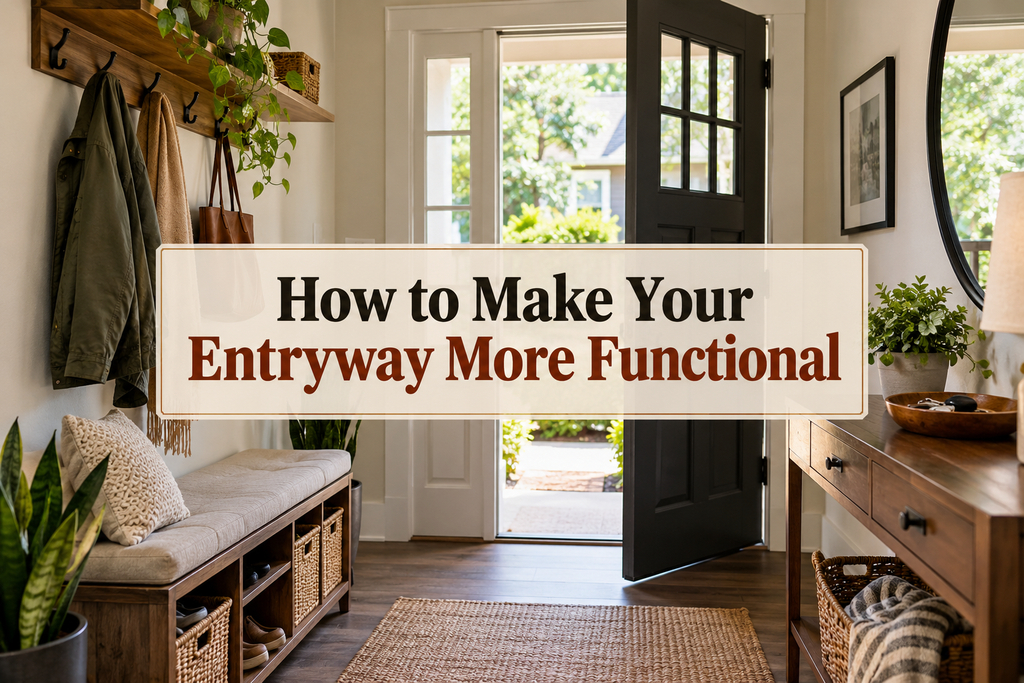
If you have a bench near the door, consider choosing one with shoe storage underneath. This gives you two useful functions in the same piece of furniture.
Try to keep only regularly used shoes in the entryway. Storing every pair near the front door can make the area feel crowded.
Add Hooks for Everyday Items
Wall hooks are simple, affordable, and extremely useful. They provide a convenient place to hang coats, handbags, hats, scarves, umbrellas, and reusable shopping bags.
Installing hooks also makes good use of vertical wall space. This is especially helpful in small entryways where there is not enough room for large furniture.
Place hooks at a comfortable height for adults and consider adding a few lower hooks if children use the space. When children have easy access to their own hooks, they are more likely to hang up their coats and bags instead of dropping them on the floor.
Avoid putting too many items on each hook. A few everyday essentials will look much neater than a wall filled with jackets and bags.
Include a Comfortable Entryway Bench
A bench can make an entryway much more practical. It provides a comfortable place to sit while putting on or removing shoes.
For small homes, look for a bench that includes extra storage. Some benches have shelves underneath, while others have compartments or lift up seats that can hold shoes, bags, or seasonal accessories.
Choose a bench that fits the scale of the room. A large piece of furniture can make a narrow hallway difficult to move through.
If there is very little floor space, a small stool can provide similar benefits without taking up as much room.
Adding a cushion can make the seating more comfortable while also introducing color and texture to the entryway.
Create a Drop Zone for Keys and Small Items
Many people spend unnecessary time looking for keys, sunglasses, wallets, and other small essentials before leaving home. Creating a dedicated drop zone can solve this problem.
A small tray on a console table works well for keys and wallets. A decorative bowl can provide the same function while adding style.
You can also install a wall mounted organizer if there is no room for a table. Some organizers include small shelves, hooks, and compartments for mail.
The most important thing is consistency. When you always place important items in the same location, they become much easier to find.
Keeping the drop zone simple is important. If too many unrelated objects collect there, it will quickly become another cluttered surface.
Use a Console Table Wisely
A console table can be both decorative and functional. It provides a useful surface for small essentials while giving you an opportunity to create an attractive entrance.
Look for a narrow table that leaves enough room to walk comfortably. Drawers are especially useful because they can hide small items that would otherwise make the surface look messy.
Use the top of the table for a few carefully selected objects. You might include a tray for keys, a small lamp, a plant, or a decorative bowl.
The space underneath the table can also be used efficiently. Baskets placed below can store shoes, bags, pet supplies, or other frequently used items.
Try not to cover every part of the table with decorations. Leaving some open space creates a cleaner and more organized appearance.
Improve Entryway Lighting
Good lighting can make an entryway feel more comfortable and functional. Many entrances receive limited natural light, especially in apartments or homes with covered porches.
A bright ceiling light can provide general illumination. If you have a console table, a small lamp can add softer lighting during the evening.
Wall lights can also work well when floor and table space is limited.
Pay attention to the color and brightness of the bulbs you choose. The goal is to make the entrance feel welcoming while still providing enough light to find shoes, keys, and other items easily.
If your entryway has a window, avoid blocking it with tall furniture. Natural light can make even a small entrance feel larger.
Add a Mirror Near the Entrance
A mirror is one of the most useful accessories for an entryway. It gives you a convenient place to check your appearance before leaving home.
Mirrors can also make small spaces feel brighter and more open by reflecting light around the room.
Choose a size and shape that suits the available wall space. A large vertical mirror can visually increase the height of the room, while a round mirror can soften an entryway filled with straight furniture lines.
If possible, position the mirror where it can reflect natural or artificial light. This can help create a brighter atmosphere.
Make sure it is securely attached to the wall, especially in busy family households.
Use Baskets to Control Clutter
Baskets are useful because they can hide everyday items while keeping them easy to access. They also help create a more organized appearance without requiring complicated storage systems.
You can use baskets for scarves, gloves, reusable bags, pet leashes, children’s accessories, or small outdoor items.
Labeling baskets can be helpful in larger households. When everyone knows where things belong, it becomes easier to maintain an organized entryway.
Choose baskets that fit properly inside shelves or underneath furniture. Oversized baskets can take up valuable walking space.
Try not to use baskets as places to hide random clutter. Each basket should have a clear purpose.
Make Use of Vertical Space
When floor space is limited, the walls become valuable storage areas.
Floating shelves can hold small baskets, decorations, and useful items. Wall mounted cabinets can provide additional storage without filling the floor.
A tall shelving unit can also work in a wider entryway, but it should not make the entrance feel narrow or crowded.
Keep frequently used items within easy reach and place less commonly used objects on higher shelves.
Using vertical space allows you to increase storage while maintaining an open pathway through the entrance.
Add a Durable Entryway Rug
An entryway rug does more than improve the appearance of the space. It can also help collect dust and moisture from shoes before they are carried into the rest of the home.
Choose a rug made from a durable material that can handle frequent foot traffic. It should also be easy to clean.
Make sure the rug fits the size of the entrance properly. A rug that is too large may prevent the door from opening smoothly, while one that is too small may not provide enough coverage.
Using a non slip pad underneath can help keep the rug safely in place.
Choose a pattern or color that works with your home’s interior while still being practical enough for everyday use.
Plan Storage Around Your Lifestyle
The best entryway organization ideas are the ones that match your real habits.
If you frequently take a dog for walks, create a small area for the leash, waste bags, and walking accessories. If children leave for school through the main entrance, provide dedicated hooks or baskets for backpacks.
People who commute every day may need space for work bags, headphones, travel cards, or umbrellas.
Instead of designing the space around what looks attractive in pictures, focus on the items you actually use.
Practical design often looks better because everything has a logical place.
Keep Seasonal Items Under Control
Entryway needs change throughout the year. During colder months, you may need storage for coats, gloves, hats, and boots. Warmer months may require space for sun hats, outdoor shoes, or light jackets.
Avoid leaving every seasonal item in the entryway all year.
At the beginning of each season, review what is stored near the door. Move unnecessary items into closets, wardrobes, or storage containers.
This simple habit prevents the entrance from becoming overcrowded and keeps the most useful items within easy reach.
Make the Space Easy to Clean
The entrance is one of the areas of the home that collects dirt most quickly. Shoes bring in dust, water, leaves, and outdoor debris.
Choose surfaces and furniture that are easy to maintain. Washable rugs, wipeable storage furniture, and simple flooring can make cleaning faster.
Avoid placing too many decorative objects near the floor because they can make sweeping and vacuuming more difficult.
Keeping cleaning supplies nearby can also be useful if storage allows. A small brush and dustpan can make it easier to deal with dirt immediately.
A clean entryway always feels more organized, even when the design itself is simple.
Add Personality Without Creating Clutter
A functional entryway does not need to look plain. Small decorative details can make the space feel warm and personal.
A framed picture, indoor plant, mirror, decorative bowl, or small piece of artwork can create visual interest.
The key is moderation. Too many decorative accessories can reduce useful space and create unnecessary clutter.
Choose a few items that work well with the rest of your home. A consistent style helps the entryway feel connected to nearby rooms.
Plants are particularly effective because they add natural color without requiring much visual decoration. Choose varieties that can handle the available light conditions.
Develop a Simple Daily Routine
Even the best entryway storage system will not stay organized without a few good habits.
Take a minute each day to put shoes on the rack, hang bags on hooks, remove unwanted mail, and return small items to their proper places.
Encourage everyone in the household to follow the same system.
You can also spend a few minutes once a week checking baskets, shelves, and surfaces for items that should be moved elsewhere.
Small maintenance habits are much easier than waiting until the entrance becomes completely cluttered.
Final Thoughts
Making your entryway more functional is mainly about creating a space that supports your everyday routine. You do not need expensive furniture or a large entrance to achieve good results. Simple additions such as shoe storage, wall hooks, a bench, baskets, a mirror, and a dedicated place for keys can completely change how the area works.
Start by removing unnecessary clutter, then identify the items you use most often when entering or leaving the house. Give each of those items a practical storage location. Use walls wisely, protect walking space, improve lighting, and choose furniture that can perform more than one function.
Most importantly, keep the design realistic. A beautiful entryway is useful, but a functional entryway that stays organized during everyday life is even better. When everything has a proper place, leaving home becomes easier, returning home feels calmer, and the entrance creates a welcoming impression from the moment you walk through the door.


