

Empty walls can make even a beautifully furnished home feel unfinished. You may have comfortable furniture, attractive lighting, and carefully selected colors, but a large blank wall can still make the room look cold or incomplete. I have always felt that walls are more than simple boundaries between rooms. They are an important part of interior design and provide an opportunity to express personality, creativity, and style.
The good thing about decorating empty walls is that you do not always need expensive artwork or professional interior design services. With thoughtful planning and a few creative ideas, an ordinary blank wall can become one of the most interesting features in your home.
If you are searching for creative ideas for decorating empty walls, the following suggestions can help you turn unused wall space into something attractive, practical, and personal.
Start With a Gallery Wall
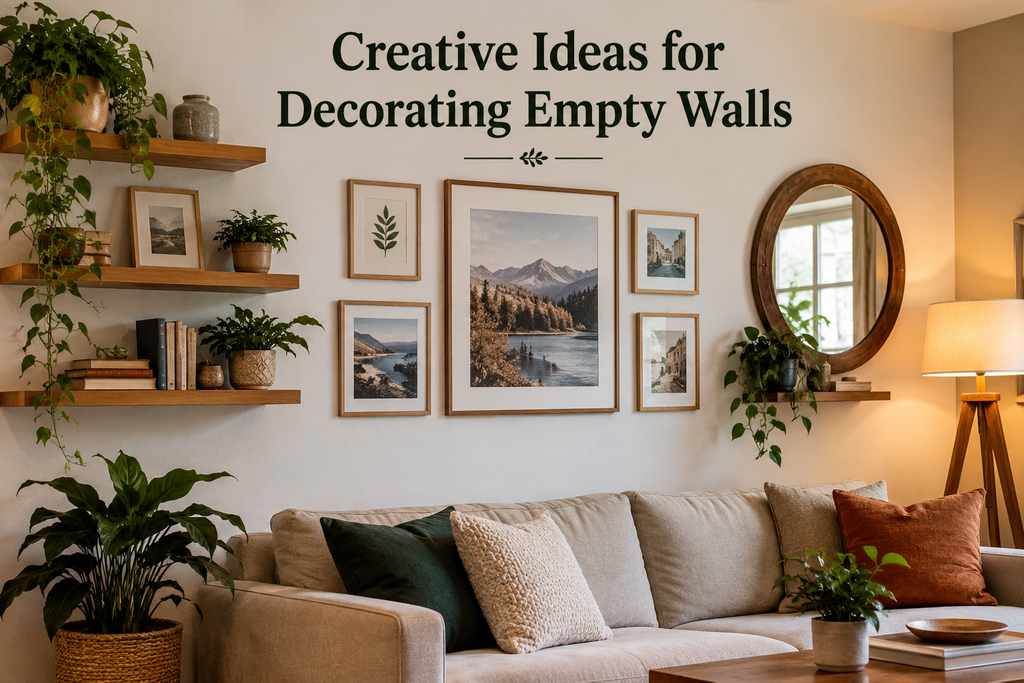
A gallery wall is one of the most popular ways to decorate a large empty wall. Instead of hanging one large picture, you can combine several smaller pieces to create an interesting arrangement.
Family photographs, travel pictures, paintings, illustrations, and meaningful quotes can all become part of a gallery wall. The important thing is to create some visual connection between the different pieces.
For example, using frames in similar colors can make different photographs feel like part of the same collection. You can also choose a theme such as nature, travel, family memories, architecture, or abstract art.
Before hanging anything, place the frames on the floor and experiment with different layouts. This simple step allows you to see how the arrangement will look before making holes in the wall.
Gallery walls work especially well in living rooms, hallways, staircases, bedrooms, and home offices.
Display One Large Piece of Artwork
Sometimes simplicity creates the strongest visual effect.
Instead of filling a wall with many decorations, consider hanging one large painting, photograph, or artwork. Oversized wall art can immediately become the focal point of a room.
Choose artwork that works well with the colors already present in your furniture, curtains, rugs, and accessories.
The artwork does not necessarily need to match every color perfectly. In fact, a small amount of contrast can make the room more interesting.
A large landscape photograph can create a peaceful feeling, while abstract artwork can give the room a modern appearance. Botanical prints can bring freshness to the interior, and traditional artwork can create warmth and character.
Use Floating Shelves
Floating shelves are both decorative and practical, which makes them an excellent option for empty walls.
You can install two or three shelves and decorate them with books, small plants, framed photographs, candles, pottery, and other attractive objects.
One advantage of floating shelves is flexibility. Unlike permanent wall art, the decorations on shelves can be changed whenever you want.
During spring, you might display fresh flowers and light colored accessories. During colder months, you can introduce warmer colors, candles, and natural materials.
Try not to fill every inch of the shelves. Leaving some open space around decorative objects helps the arrangement look cleaner and more balanced.
Create a Wall With Indoor Plants
Plants are usually placed on tables, windowsills, and floors, but they can also become beautiful wall decorations.
Wall mounted planters are a creative way to introduce greenery without using valuable floor space.
Plants such as pothos, philodendron, spider plants, and certain types of ferns can look beautiful when displayed on wall shelves or hanging containers.
Trailing plants are particularly effective because their leaves naturally flow downward, adding movement and texture to the wall.
Before choosing plants, consider how much natural light the area receives. Selecting plants that match the lighting conditions will make them easier to maintain.
A green wall can create a relaxing connection with nature and make a room feel more welcoming.
Decorate With Mirrors
Mirrors are useful when you want to decorate a wall while also making a room appear larger and brighter.
A large mirror can reflect both natural and artificial light around the room. This effect is especially useful in smaller spaces where light may be limited.
You can hang one statement mirror or create an arrangement using several smaller mirrors.
Round mirrors work beautifully above consoles, fireplaces, and small cabinets. Rectangular mirrors are often suitable for hallways and dining areas.
Decorative frames can also influence the style. Wooden frames create warmth, while simple metal frames can support a modern interior.
When possible, position a mirror where it reflects something attractive, such as a window, plant, artwork, or beautiful part of the room.
Build a Simple Accent Wall
Paint can completely change an empty wall without adding physical decorations.
An accent wall uses a different color from the other walls in the room. It can create depth and draw attention to a particular area.
Deep green, navy blue, warm beige, soft terracotta, and muted gray are examples of colors that can create strong but comfortable accent walls.
You can also create simple painted shapes if you want something more creative.
Large arches, circles, rectangles, and geometric patterns can make an ordinary wall feel artistic.
However, avoid using too many colors in one small area. A limited color palette usually produces a cleaner and more professional appearance.
Use Wallpaper for More Character
Wallpaper has become much more versatile than it once was. Today, there are designs suitable for almost every interior style.
Floral patterns can create softness, botanical designs can bring nature indoors, and geometric wallpaper can create a contemporary appearance.
You do not need to wallpaper an entire room.
Covering a single empty wall can make a powerful visual statement while keeping the rest of the space simple.
Removable wallpaper is also useful for people who enjoy changing their interiors occasionally. It can provide the appearance of traditional wallpaper without the same long term commitment.
Display Decorative Plates
Decorative plates can become beautiful wall art when arranged thoughtfully.
This idea works particularly well in kitchens, dining rooms, and breakfast areas.
You can use traditional ceramic plates, handmade pottery, vintage pieces, or plates collected during travels.
Different sizes can create an interesting arrangement, but try to maintain some connection through color or design.
Before mounting the plates, arrange them on a table or floor to create a layout that feels balanced.
Decorative plates can add charm and personality while giving unused items a meaningful purpose.
Create a Personal Photo Wall
Digital photographs often remain hidden inside phones and computers. Printing a few favorite photographs can turn meaningful memories into home decoration.
Choose photographs from family celebrations, vacations, nature trips, or everyday moments that make you happy.
Black and white photography can create an elegant and consistent appearance, even when the photographs were taken at different times.
For a more relaxed style, smaller prints can be arranged using simple clips, strings, or small frames.
Personal photographs make a home feel individual rather than looking like a display copied from a furniture catalog.
Hang a Decorative Textile
Not every wall decoration has to be framed artwork.
Beautiful textiles can add color, softness, and texture to empty walls.
Woven wall hangings, handmade fabrics, rugs, embroidered pieces, and traditional textiles can all become impressive decorations.
Textiles work particularly well in bedrooms and living rooms because they can make the space feel warmer and more comfortable.
They are also useful for decorating very large walls where purchasing oversized artwork might be expensive.
Choose a textile that complements the existing colors in the room without making the wall appear too busy.
Install Wall Molding
Wall molding can transform a simple wall into an architectural feature.
Decorative molding creates depth and detail without requiring many accessories.
Simple rectangular molding designs can produce an elegant appearance in living rooms, bedrooms, dining rooms, and hallways.
Painting the molding the same color as the wall creates a subtle look. Painting it in a slightly different shade can create more contrast.
Wall molding works particularly well in interiors where you want sophistication without covering the wall with many decorations.
Create a Reading Corner Wall
An empty wall near a chair or small sofa can become part of a comfortable reading corner.
Install a few small bookshelves and arrange your favorite books where they are easy to reach.
Add a comfortable chair, reading lamp, and perhaps a small side table nearby.
A small piece of artwork or a plant can complete the area.
This idea turns unused wall space into a functional part of the home while also creating a peaceful place for reading and relaxation.
Use Baskets as Wall Decorations
Woven baskets are another creative option for decorating empty walls.
Natural materials introduce warmth and texture into a room. Baskets made from materials such as rattan, bamboo, and natural fibers can work particularly well in relaxed interiors.
Choose baskets in different sizes and arrange them in a loose group.
Although the individual pieces may look simple, their different patterns and textures can create an attractive wall display.
This decorating idea works well in living rooms, bedrooms, dining areas, and entryways.
Display Your Favorite Collections
If you enjoy collecting certain objects, consider turning your collection into wall decoration.
Small sculptures, hats, musical instruments, vintage objects, handmade crafts, or travel souvenirs can sometimes be displayed creatively on walls.
Displaying collections allows your home to tell a personal story.
The main challenge is avoiding clutter. Instead of displaying everything you own, select the most attractive or meaningful pieces.
Good spacing between objects helps each item receive attention.
Install Functional Wall Storage
Wall decoration can also improve organization.
Pegboards, hooks, wall racks, and small storage units can turn empty walls into useful storage areas.
In a home office, a pegboard can hold stationery, notebooks, and small accessories. In an entryway, attractive hooks can organize coats, hats, keys, and bags.
In the kitchen, wall rails can be used for utensils and lightweight cooking accessories.
The secret is choosing storage solutions that are attractive enough to become part of the room’s design.
Add Wall Lighting
Lighting itself can become a form of wall decoration.
Wall sconces are useful because they provide light while adding visual interest. They can be installed beside artwork, mirrors, beds, or reading areas.
Warm lighting can make an empty wall feel softer and more inviting during the evening.
Decorative light fixtures can also introduce interesting shapes and materials into the room.
When installing permanent lighting, electrical safety should always be considered. Professional installation may be appropriate when new wiring is required.
Keep the Design Balanced
One of the most important lessons in wall decoration is knowing when to stop.
A wall does not need to be completely covered to look beautiful.
Too many pictures, shelves, colors, and decorations can make a room feel crowded. Empty space around decorative elements gives the eye somewhere to rest.
Consider the furniture positioned near the wall as well.
For example, artwork above a sofa should visually connect with the sofa rather than appearing too small or floating far above it.
Similarly, shelves should not overwhelm smaller furniture placed underneath them.
Good interior decoration often depends more on proportion and balance than on the number of decorative objects.
Choose Decorations That Feel Personal
Trends can provide useful inspiration, but your home should ultimately reflect your own preferences.
A decoration does not need to be fashionable to deserve a place on your wall.
A photograph from an important trip, artwork created by a family member, an old map, a handmade textile, or a collection gathered over many years may have more meaning than an expensive decorative object.
When your walls contain things connected to your experiences and interests, the home naturally feels more comfortable and authentic.
Final Thoughts
Learning how to decorate empty walls is mostly about looking at unused space with a little more imagination. A blank wall can become a gallery, a storage area, a display for plants, a reading corner, or simply a beautiful focal point.
Creative ideas for decorating empty walls do not have to involve complicated projects or large budgets. Floating shelves, mirrors, photographs, artwork, plants, baskets, wallpaper, paint, and personal collections can all transform plain surfaces.
Start with one wall rather than trying to decorate the entire home at once. Think about the size of the space, the furniture nearby, the colors already present, and the atmosphere you want to create.
Most importantly, allow your walls to reflect something about you. The most memorable homes are rarely the ones filled with the most expensive decorations. They are the ones where every room feels thoughtfully created, comfortable, and personal.


