Watering may look like the easiest part of gardening, but it is also one of the most common areas where beginners make mistakes. Plants need water to grow, produce flowers, develop healthy roots, and absorb nutrients from the soil. However, giving plants too much water can be just as harmful as giving them too little. Learning how to water garden plants the right way is therefore an important skill for anyone who wants a healthy and attractive garden.
When I started learning more about gardening, I realized that good watering is not simply about pouring water on plants every day. Different plants have different needs, and several factors such as soil type, weather, plant age, season, and location can affect how much water a garden needs. Understanding these factors makes plant care much easier and can save both water and time.
Understand What Your Plants Actually Need
The first step in proper garden watering is understanding that every plant does not need the same amount of water. Some plants prefer moist soil, while others grow better when the soil becomes slightly dry between watering sessions.
Vegetable plants usually need regular moisture because they grow quickly and produce crops within a relatively short period. Flowering plants may also need consistent watering during active growth and blooming. On the other hand, many established shrubs and drought tolerant plants can survive with less frequent watering.
Instead of following one fixed watering schedule for the entire garden, observe each group of plants. Check the soil and learn how quickly it dries. This simple habit can prevent many watering problems.
Check the Soil Before Watering
One of the best ways to know whether a plant needs water is to check the soil.
Push your finger about two inches into the soil near the plant. If the soil feels dry at that depth, watering may be necessary. If it still feels moist, waiting another day can often be better.
The surface of the soil can sometimes be misleading. On a warm day, the top layer may look completely dry while the soil underneath still contains enough moisture for the roots. Watering only according to how the surface looks may lead to overwatering.
For larger gardens, a simple soil moisture meter can also be useful, but regular observation is usually enough for most home gardeners.
Water Deeply Instead of Lightly
Deep watering is one of the most important principles of healthy garden care.
A small amount of water applied every day often wets only the surface of the soil. This encourages plant roots to remain close to the top, where they are more vulnerable to heat and dry conditions.
Deep watering allows moisture to travel farther into the soil. Plant roots naturally grow toward this moisture, creating a stronger and deeper root system.
In many gardens, watering thoroughly a few times per week is better than giving plants a small amount every day. The exact frequency will depend on the weather, soil, and type of plant.
The goal is to moisten the root zone without leaving the soil permanently soaked.
Water Early in the Morning
The best time to water garden plants is usually early in the morning.
Morning watering gives plants time to absorb moisture before the heat of the day becomes intense. The cooler temperature also reduces evaporation, which means more water reaches the roots instead of disappearing into the air.
Morning watering is especially useful during summer because plants have access to moisture when temperatures begin to rise.
Another benefit is that leaves that become wet during watering have enough time to dry during the day. This can reduce the risk of certain fungal problems that are more likely to develop when leaves remain wet for long periods.
If morning watering is not possible, watering in the late afternoon can also work. However, try to avoid leaving foliage wet throughout the night.
Focus Water Around the Roots
Plants absorb most of their water through their roots, so this is where your attention should be focused.
Instead of spraying water across the entire plant, apply it directly to the soil around the base. This allows water to reach the root zone where it is actually needed.
Watering the leaves may make plants look refreshed, but it does not necessarily provide enough moisture to the roots. Constantly wet foliage can also encourage disease in some plants.
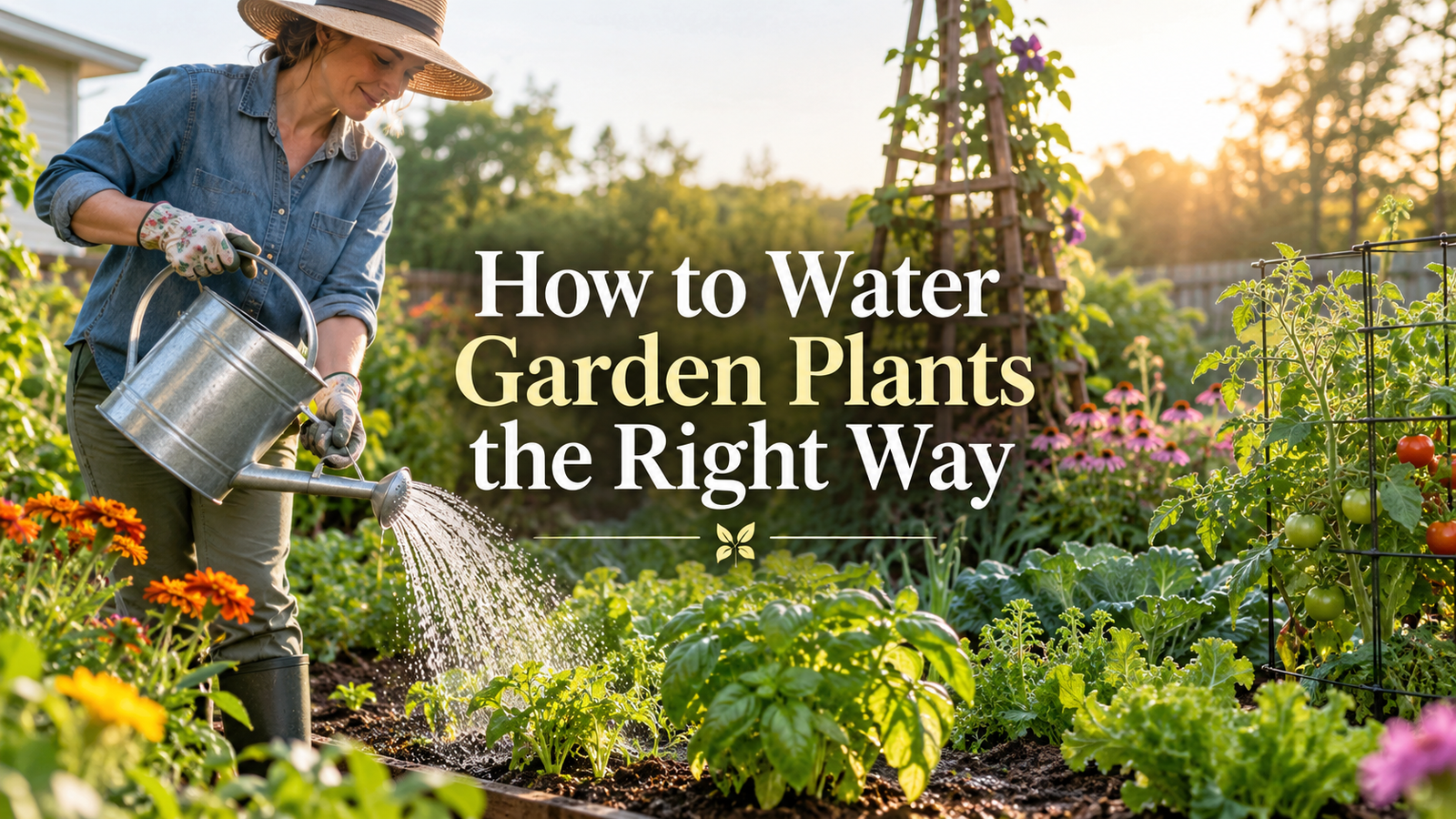
A watering can, garden hose with a gentle nozzle, soaker hose, or drip irrigation system can all be useful depending on the size of your garden.
For small gardens, a watering can provides good control. For larger areas, drip irrigation or soaker hoses can make watering more efficient.
Avoid Overwatering Garden Plants
Many gardeners worry about plants becoming too dry, but overwatering is also a serious problem.
Roots need both water and oxygen. When soil remains constantly saturated, air spaces in the soil become filled with water. Roots may then struggle to get enough oxygen.
Signs of overwatering can include yellow leaves, soft stems, slow growth, leaf drop, and constantly wet soil. In severe cases, root damage may occur.
If a plant looks unhealthy even though you are watering it regularly, do not automatically assume it needs more water. Check the soil first.
Sometimes reducing watering is exactly what the plant needs.
Learn the Signs of Underwatering
Plants can also show clear signs when they do not receive enough moisture.
Leaves may become dry, curled, or wilted. The soil may pull away from the edges of containers, and flowers may fade quickly. Vegetable plants may produce smaller crops when they experience repeated water stress.
Temporary wilting during the hottest part of the day does not always mean a plant needs immediate watering. Some plants naturally lose moisture faster during intense heat and recover when temperatures become cooler.
Check the soil before deciding what to do. If the soil is dry below the surface, give the plant a slow and thorough watering.
Consider Your Soil Type
Soil type plays a major role in how often a garden should be watered.
Sandy soil drains water quickly. Gardens with sandy soil may therefore need watering more often because moisture does not remain around the roots for very long.
Clay soil holds water much longer. It may require less frequent watering, but it can become waterlogged if too much water is applied.
Loamy soil is often considered ideal for gardening because it holds useful moisture while still allowing excess water to drain.
Adding organic matter such as compost can improve both sandy and clay soil. Compost helps sandy soil retain moisture and can improve the structure and drainage of heavy soil.
Improving the soil is one of the best long term ways to make garden watering more effective.
Use Mulch to Keep Soil Moist
Mulch can make a noticeable difference in how quickly garden soil dries.
A layer of organic mulch placed around plants helps reduce evaporation by protecting the soil from direct sunlight. It can also keep the root zone cooler during hot weather.
Materials such as shredded leaves, compost, bark, or straw can be useful depending on the garden.
Leave a little space around plant stems instead of piling mulch directly against them. This allows air movement and can reduce moisture related problems near the base of the plant.
Mulch is particularly valuable during warm weather because it allows soil to stay moist for a longer period after watering.

Adjust Watering During Hot Weather
Plants usually need more attention during periods of extreme heat.
Higher temperatures increase evaporation from the soil and water loss through leaves. Newly planted flowers, vegetables, and container plants may dry especially quickly.
During hot weather, check soil moisture more frequently. Deep watering in the morning can help plants handle afternoon heat.
However, hot weather does not mean every plant should automatically be watered several times a day. Constant watering may still create problems if the soil remains wet.
Observation is more reliable than following a strict daily schedule.
Reduce Watering During Cool or Rainy Weather
Just as plants may need more water in summer, they usually need less during cool or rainy periods.
Lower temperatures reduce evaporation, and plants may grow more slowly. Soil can therefore remain moist for much longer.
Before watering after rainfall, check how deeply the rain actually reached the soil. A short shower may only wet the surface, while steady rain can provide enough moisture for several days.
Reducing unnecessary watering during rainy weather helps prevent root problems and saves water.
Give Extra Attention to New Plants
Recently planted flowers, shrubs, vegetables, and trees need special care because their roots have not yet spread widely through the surrounding soil.
The root area can dry more quickly than it does for established plants. New plants should therefore be checked regularly until they develop stronger root systems.
Water slowly around the original root area and gradually encourage roots to spread into the surrounding soil.
As plants become established, watering can usually become less frequent but deeper.
Water Container Plants Carefully
Plants growing in pots often need more frequent watering than plants growing directly in the ground.
Containers hold a limited amount of soil, so moisture can disappear quickly, especially during warm or windy weather. Small pots may dry even faster.
Check container soil regularly by touching the top layer and slightly below it. When the soil feels dry, water thoroughly until a small amount begins to drain from the bottom.
Drainage holes are very important because they allow excess water to escape. Pots without proper drainage can hold too much moisture around the roots.
Never allow most garden containers to remain permanently filled with standing water.
Use the Right Watering Method
Different gardens can benefit from different watering methods.
Hand watering is practical for a small garden because it allows you to control exactly where the water goes. A soaker hose is useful for garden beds because it slowly releases water close to the soil.
Drip irrigation is another efficient option. It delivers small amounts of water directly to the root area and can reduce evaporation.
Sprinklers are useful for lawns and some larger planting areas, but they can lose more water through evaporation and may wet plant leaves unnecessarily.
Choose a method that matches the size and design of your garden.
Pay Attention to Water Pressure
Strong water pressure can damage young plants and disturb the soil around their roots.
When using a hose, choose a gentle flow. Water should soak into the soil instead of washing soil away.
Seedlings require particularly careful watering because their stems are delicate and their roots are shallow.
A watering can with a gentle rose attachment or a soft hose setting works well for young plants.
Create a Flexible Watering Routine
A good watering routine should never be completely fixed.
Weather changes, plants grow, seasons change, and soil conditions vary. Your watering schedule should change as well.
Instead of deciding that every plant must be watered at exactly the same time every day, develop the habit of inspecting your garden.
Look at the leaves. Touch the soil. Notice how quickly certain areas dry. Pay attention to shade and sunlight.
Plants growing in full sun often dry faster than plants in shaded locations. Areas exposed to strong wind may also lose moisture quickly.
The more familiar you become with your garden, the easier it becomes to recognize when water is actually needed.
Save Water Whenever Possible
Good gardening should also avoid unnecessary water waste.
Watering early in the day, using mulch, improving soil with compost, and directing water toward the root zone can all improve efficiency.
Rainwater collection can also be useful where practical. Collected rainwater can be used for many garden plants and reduces dependence on household water.
Fix leaking hoses and connections because even small leaks can waste a surprising amount of water over time.
Efficient watering is not about giving plants less than they need. It is about making sure the water you use actually reaches the roots.
Common Garden Watering Mistakes to Avoid
Several mistakes can make watering less effective.
Watering too lightly is one common problem. It encourages shallow roots and may leave deeper soil dry.
Watering too frequently can keep soil constantly wet and reduce oxygen around roots.
Another mistake is watering only because the surface looks dry without checking deeper soil.
Some gardeners also spray leaves while barely wetting the soil. Since roots are responsible for absorbing most of the water, the root zone should always be the main focus.
Following a fixed schedule regardless of rain, temperature, or plant condition is another habit worth avoiding.
Successful garden watering depends more on observation than on the clock.
Final Thoughts
Learning how to water garden plants the right way can greatly improve the health of your garden. Plants need enough moisture to grow, but they also need oxygen, good drainage, and periods when the soil is not completely saturated.
Check the soil before watering, provide deep moisture around the roots, and water during the cooler part of the morning whenever possible. Adjust your routine according to the season, weather, soil type, and needs of individual plants.
New plants and containers may need more frequent attention, while established plants can often handle longer periods between watering sessions.
The most useful lesson I have learned about garden watering is that plants should be observed rather than watered automatically. Once you begin checking the soil and noticing how plants respond, it becomes much easier to understand what they need.
Proper watering does not have to be complicated. A few simple habits can help plants develop stronger roots, healthier leaves, better flowers, and more productive growth. With patience and regular observation, watering can become one of the easiest and most effective parts of maintaining a healthy garden.