A beautiful flower garden can completely change the appearance of a home. Colorful flowers, fresh greenery, gentle fragrance, and healthy plants make an outdoor space feel peaceful and welcoming. Creating such a garden may look difficult at first, especially for beginners, but it becomes much easier when you understand the basic needs of flowering plants.
When I first started learning about flower gardening, I realized that success does not depend on filling every empty space with expensive plants. A beautiful garden comes from proper planning, choosing suitable flowers, preparing healthy soil, providing enough sunlight, and caring for plants regularly. Even a small area can become attractive when flowers are selected and arranged thoughtfully.
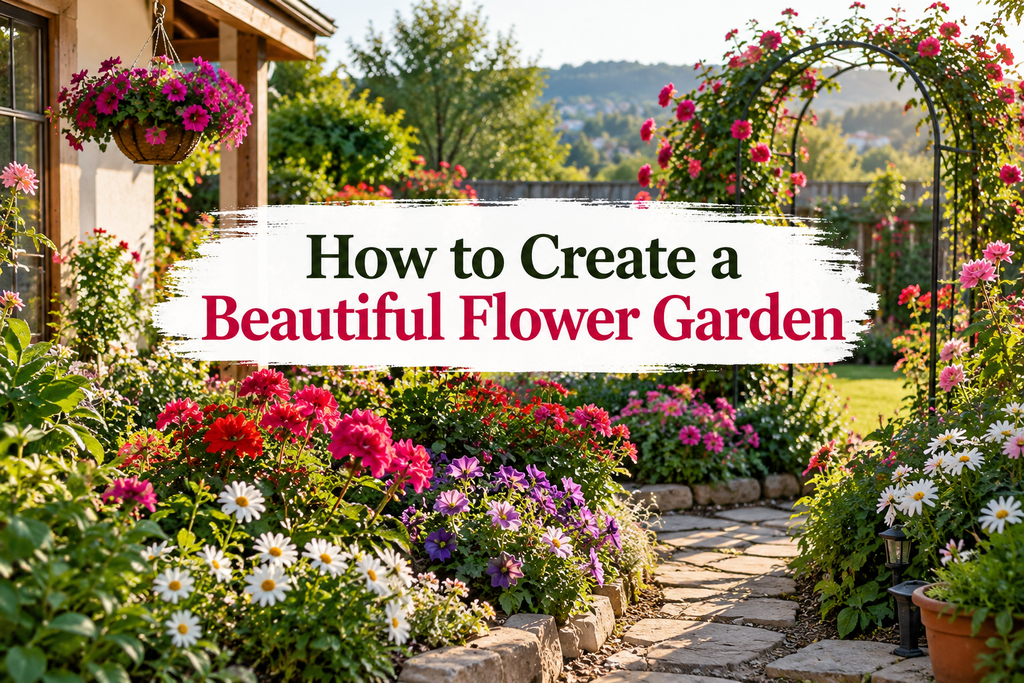
If you want to learn how to create a beautiful flower garden, the following practical ideas can help you build a colorful and healthy space that continues to look good throughout the growing season.
Choose the Right Location for Your Flower Garden
The first step in creating a beautiful flower garden is selecting the right location. Flowers need suitable growing conditions, and sunlight is one of the most important factors.
Observe your outdoor space during different times of the day. Some areas may receive direct sunlight for several hours, while others remain shaded because of walls, trees, or nearby buildings.
Many popular flowering plants grow best in areas receiving around six hours of sunlight each day. However, some flowers prefer partial shade. Understanding how much sunlight your garden receives will help you choose suitable plants later.
The location should also have good drainage. Water should not remain around plant roots for long periods because constantly wet soil can encourage root problems.
Try to choose a place that is easy to see from your home, patio, entrance, or sitting area. A flower garden becomes more enjoyable when you can appreciate it regularly.
Start With a Simple Garden Plan
Planning before planting saves time and prevents unnecessary mistakes.
Decide how much space you want to use for your flower garden. Beginners may find it easier to start with a manageable area rather than creating a very large garden immediately.
Think about the shape of the flower bed. Curved garden beds often create a soft and natural appearance, while straight borders can look clean and organized.
You can sketch a simple layout on paper. Mark where taller flowers, medium plants, shorter flowers, pathways, and decorative features will be placed.
Planning does not have to be complicated. The main purpose is to understand where plants will grow before you begin digging.
Prepare Healthy Soil
Healthy soil is one of the most important foundations of a successful flower garden.
Before planting anything, remove weeds, stones, old roots, and unnecessary debris from the area. Loosen the soil using a garden fork or suitable gardening tool.
Good soil should allow plant roots to grow easily while holding enough moisture and nutrients.
Adding organic matter such as mature compost can improve many types of garden soil. Compost helps improve soil structure and provides useful nutrients as it breaks down.
If the soil is very compacted, work organic matter into the upper layer instead of planting directly into hard ground.
You should also learn about the natural characteristics of your soil. Some flowering plants prefer slightly acidic conditions, while others are comfortable in neutral or slightly alkaline soil. Choosing plants that match your existing conditions can make gardening much easier.
Choose Flowers Suitable for Your Climate
A beautiful flower garden should not only look attractive. It should also contain plants that can grow successfully in your local climate.
Before purchasing flowers, consider your area’s temperatures, rainfall, humidity, and seasonal conditions.
Plants that naturally suit your climate usually require less attention and have a better chance of remaining healthy.
Look at plant labels when buying flowers from a nursery. These labels normally provide useful information about sunlight, watering, mature size, and growing conditions.
You can also observe successful gardens in your local area. Flowers that grow well in nearby gardens may also perform well in similar conditions at your home.
Combine Annual and Perennial Flowers
Using both annual and perennial flowers can make a garden more interesting.
Annual flowers usually complete their life cycle within one growing season. They are useful when you want strong seasonal color and the freedom to create different designs from year to year.
Perennial flowers can return for several years when grown in suitable conditions. They form the long term structure of many flower gardens.
A combination of both types can provide variety while reducing the need to replace every plant each season.
You might use perennials as the main foundation and fill empty areas with colorful annual flowers.
This approach can create a garden that feels established while still allowing you to experiment with new colors.
Select a Balanced Color Scheme
Color plays an important role in the overall appearance of a flower garden.
Some gardeners enjoy bright combinations of red, orange, yellow, purple, pink, and blue. Others prefer a calmer garden using softer colors such as white, pale pink, lavender, and light purple.
There is no single correct choice. The best color scheme depends on the atmosphere you want to create.
For a peaceful garden, use a smaller range of related colors. For a lively garden, combine several contrasting colors.
Green leaves also contribute to the design. Plants with different shades and textures of foliage can keep the garden attractive even when fewer flowers are blooming.
Repeating similar colors in different areas can make the entire garden feel connected instead of random.
Arrange Plants According to Height
Plant height should be considered before placing flowers in the garden.
In a flower bed viewed mainly from the front, tall plants usually work well near the back. Medium sized plants can grow in the center, while shorter flowers can be placed near the front.
For a garden bed that can be viewed from every direction, tall plants often look better near the center, with shorter plants gradually surrounding them.
Always consider the mature height rather than the size of a young plant at the time of purchase.
Proper arrangement prevents tall plants from hiding smaller flowers and creates a layered appearance that adds depth to the garden.
Give Plants Enough Space
One mistake beginners often make is planting flowers too close together because young plants initially look small.
Over time, healthy plants expand. If they are crowded, they may compete for sunlight, moisture, nutrients, and air circulation.
Crowded conditions can also encourage certain plant diseases because leaves remain damp longer when air cannot move freely.
Follow recommended spacing when possible.
The garden may look slightly empty during the first few weeks, but patience is worthwhile. Once plants mature, they will naturally fill much of the available space.
Create Continuous Seasonal Color
A beautiful flower garden becomes even more enjoyable when something is blooming during different parts of the growing season.
Not every flowering plant blooms at the same time. Some produce flowers early, some bloom during warmer months, and others continue flowering later in the season.
When selecting plants, pay attention to their typical blooming periods.
Combine flowers with different bloom times so that the garden changes gradually throughout the year.
This approach prevents the entire flower bed from looking colorful for only a few weeks and empty afterward.
Water Flowers Correctly
Proper watering helps plants establish strong roots and produce healthy flowers.
Newly planted flowers normally require closer attention because their roots have not yet spread deeply into the surrounding soil.
Water slowly so moisture reaches the root area instead of only wetting the surface.
Whenever possible, water near the base of plants rather than constantly soaking the leaves and flowers.
Morning is often a convenient time for watering because plants can absorb moisture before the hottest part of the day, and any wet foliage has time to dry.
Avoid watering on a fixed schedule without checking the soil. Weather conditions, soil type, plant species, and season can all affect how quickly moisture disappears.
Use Mulch Around Your Flowers
A layer of organic mulch can make flower garden maintenance easier.
Mulch helps reduce moisture loss from the soil and can limit the growth of unwanted weeds. It may also improve the appearance of garden beds by creating a clean surface around plants.
Organic materials such as shredded leaves, compost, or bark can be useful choices depending on availability.
Keep mulch slightly away from the main stems of plants instead of piling it directly against them.
A moderate layer is usually enough to provide benefits without covering plants or preventing water from reaching the soil.
Remove Weeds Regularly
Weeds compete with flowers for space, nutrients, water, and sunlight.
Small weeds are usually easier to remove than large established ones, so regular garden inspection is helpful.
Pull weeds gently from the root whenever possible. Removing only the visible leaves may allow some weeds to grow again.
Mulching and proper plant spacing can reduce the number of weeds, but occasional maintenance will still be necessary.
A few minutes of regular weeding is often easier than allowing unwanted plants to spread across the entire garden.
Remove Faded Flowers
Many flowering plants benefit when old blooms are removed.
This practice keeps the garden looking clean and can encourage certain plants to produce additional flowers instead of putting energy into seed development.
Use clean gardening scissors when necessary and remove damaged or dead plant material at the same time.
However, not every flower needs regular removal of faded blooms. Some gardeners leave selected seed heads because they add winter interest or provide food for birds.
Learning the needs of each plant will help you decide the best approach.
Add Decorative Garden Features Carefully
Flowers should remain the main attraction, but simple decorative features can give the garden more character.
You might add a small bench, stepping stones, attractive pots, a birdbath, or a simple garden ornament.
Avoid filling the space with too many decorations. Too many objects can distract attention from the flowers.
Choose one or two features that match the style of your home and garden.
Natural materials often blend easily with plants and help create a relaxed atmosphere.
Include a Simple Pathway
If your flower garden is large enough, consider creating a small pathway.
A path makes it easier to reach plants for watering, pruning, and general care without stepping on the soil around their roots.
Gravel, stepping stones, bricks, or other suitable materials can be used depending on your garden style and budget.
Paths also create structure and guide the eye through the garden.
Even a narrow walkway between flower beds can make the area feel more organized.
Attract Helpful Pollinators
A flower garden can become even more enjoyable when bees, butterflies, and other useful pollinators begin visiting.
Grow a variety of flowering plants with different colors and flower shapes. Plants that bloom during different seasons can provide food for pollinators over a longer period.
Whenever possible, choose some flowers that are known to provide nectar or pollen.
A shallow water source can also make the garden more welcoming to beneficial wildlife.
Seeing butterflies and bees moving from flower to flower adds life and natural beauty to an outdoor space.
Keep Learning From Your Garden
No flower garden remains exactly the same every year.
Some plants may grow better than expected, while others may struggle because of sunlight, soil, weather, or moisture conditions.
Instead of seeing these changes as failures, use them as useful information.
Observe which flowers remain healthy and which locations perform best. You may decide to move certain plants, replace unsuccessful varieties, improve the soil, or change the garden layout.
Gardening becomes easier when you learn directly from the plants growing in your own space.
Final Thoughts
Learning how to create a beautiful flower garden is mostly about understanding plants and giving them the conditions they need to grow well. You do not need a huge garden, expensive decorations, or advanced gardening skills to create an attractive outdoor space.
Begin with a suitable location, prepare healthy soil, choose flowers that match your climate, and arrange them according to color, height, and blooming season. Give each plant enough space, water carefully, control weeds, and perform simple maintenance throughout the growing season.
Most importantly, allow the garden to develop naturally. Plants take time to establish, spread, and produce their best flowers. A garden that seems simple during its first season can become much richer and more attractive as plants mature.
With thoughtful planning and regular care, even a small area can become a colorful flower garden filled with beauty, fragrance, and life. The experience of watching plants grow from small seedlings into healthy flowering displays is one of the most rewarding parts of gardening.