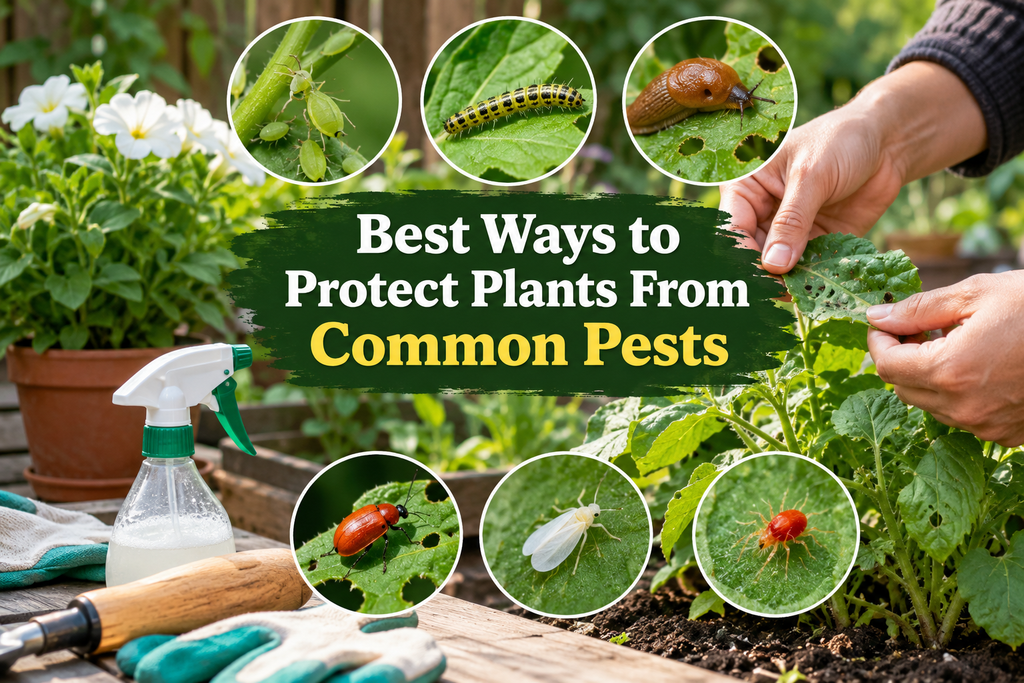
Growing healthy plants requires more than sunlight, water, and good soil. Garden pests can quickly damage leaves, flowers, roots, and fruits if they are allowed to spread. Aphids, caterpillars, whiteflies, slugs, beetles, mites, and other unwanted visitors may appear even in a carefully maintained garden. Learning the best ways to protect plants from common pests can help gardeners prevent serious damage without making plant care unnecessarily complicated.
I have found that pest control works best when it begins with prevention. Waiting until insects have multiplied usually makes the problem harder to manage. A healthy garden should be observed regularly so small changes can be noticed before they become serious.
The good thing is that gardeners do not always need strong treatments to protect their plants. Many pest problems can be controlled through simple garden habits, natural methods, physical barriers, and better plant care.
Inspect Plants Regularly
Regular inspection is one of the easiest ways to protect garden plants from pests.
Many insects begin feeding on plants long before the damage becomes obvious from a distance. Looking closely at the leaves once or twice a week makes early detection much easier.
Check both the upper and lower surfaces of leaves. Small pests such as aphids, spider mites, and whiteflies often gather underneath leaves where they are less noticeable.
Also inspect stems, new shoots, flower buds, and the soil around the plant.
Look for signs such as curled leaves, unusual spots, small holes, sticky surfaces, damaged edges, eggs, webs, or visible insects.
When a problem is discovered early, a small number of pests can often be removed before they spread to nearby plants.
Keep Plants Healthy
Healthy plants usually tolerate pest pressure better than weak plants.
Proper watering is especially important. Plants that remain too dry for long periods can become stressed, while plants growing in constantly wet soil may develop weak roots.
Water according to the needs of each plant instead of following exactly the same watering schedule for the entire garden.
Good soil also supports stronger plants. Adding compost and organic matter can improve soil structure and provide nutrients gradually.
Avoid giving plants excessive fertilizer. Too much nitrogen can encourage soft and rapid leaf growth, which may attract certain insects such as aphids.
Balanced plant care helps plants remain naturally stronger.
Remove Weeds From the Garden
Weeds compete with garden plants for water, nutrients, sunlight, and growing space. They may also provide shelter for insects.
Keeping the garden reasonably free from weeds removes some of the places where pests can live and reproduce.
Pay particular attention to weeds growing close to vegetable beds and flowering plants.
Pull weeds before they produce seeds whenever possible. A thin layer of mulch can also reduce weed growth while helping the soil retain moisture.
Keeping the growing area clean is a simple but effective part of natural garden pest control.
Remove Damaged Leaves and Plant Material
Dead and badly damaged plant material should not remain around healthy plants for too long.
Fallen leaves and decaying stems can create hiding places for insects, slugs, and other pests.
Inspect plants regularly and remove leaves that have been seriously damaged. Use clean pruning tools when cutting stems or branches.
Do not remove too much healthy foliage at once, because plants still need their leaves for photosynthesis.
Garden cleanliness reduces places where pests can hide and makes it easier to notice new problems.
Encourage Beneficial Insects
Not every insect in the garden is harmful.
Some insects naturally feed on common garden pests. Ladybirds, lacewings, hoverflies, and certain other beneficial insects can help keep pest populations under control.
A garden containing different flowers is more likely to attract useful insects.
Plants with small flowers can provide nectar and pollen that encourage beneficial insects to remain nearby.
Instead of trying to eliminate every insect from the garden, it is better to create a balanced environment where natural predators can help control harmful species.
This approach can reduce the need for frequent pest treatments.
Use Physical Barriers
Physical protection is one of the safest ways to prevent pests from reaching plants.
Fine garden mesh or suitable row covers can protect vegetables from flying insects while still allowing light and air to reach the plants.
The edges of the covering should be secured so insects cannot easily crawl underneath.
Young seedlings can be especially vulnerable to pest damage, so temporary protection during their early growth can be useful.
Barriers should still allow enough airflow around the plants. Poor ventilation may create excessive humidity and encourage fungal problems.
Always choose a covering that is appropriate for the crop and growing conditions.
Remove Larger Pests by Hand
Some pest problems can be managed without applying anything to the plant.
Caterpillars, beetles, snails, and slugs are usually large enough to remove by hand when their numbers are limited.
Check plants early in the morning or later in the day because some pests are more active during cooler periods.
Hand removal is especially practical in small home gardens where only a limited number of plants need attention.
Wear gardening gloves if you are uncomfortable handling insects directly.
Removing pests manually prevents them from continuing to feed and may reduce the number of eggs produced in the garden.
Use Water to Remove Small Insects
A controlled stream of water can sometimes remove groups of small insects from sturdy plants.
Aphids often gather around new growth and underneath leaves. Spraying them with water can knock many of them off the plant.
Use moderate pressure rather than a powerful jet that could damage delicate leaves or flowers.
Allow the plant to dry normally afterward and avoid keeping foliage continuously wet.
This method may need to be repeated because some insects can return.
For a small infestation, however, water can be one of the simplest pest management techniques available.
Maintain Proper Plant Spacing
Plants need enough room for air and light to circulate between them.
When plants are crowded together, pests can move easily from one plant to another. Dense growth may also make inspection difficult.
Follow reasonable spacing recommendations when planting vegetables, herbs, flowers, and shrubs.
If mature plants have become overcrowded, light pruning may improve airflow when the plant type allows it.
Better spacing also makes watering, pruning, harvesting, and pest inspection easier.
Gardeners sometimes try to grow too many plants in a limited space, but fewer healthy plants can often produce better results than many crowded plants.
Rotate Vegetable Crops
Crop rotation is useful for gardeners who grow vegetables year after year.
Certain pests remain in the soil or close to areas where their preferred crops were grown previously. Planting the same vegetable family in the same location every season may allow these problems to continue.
Rotating plant families to different garden beds can interrupt some pest cycles.
Keep a simple record of what was planted in each area. This makes planning the following season easier.
Crop rotation also supports better garden management because different plants use nutrients differently.
It may not eliminate every pest, but it is a valuable long term prevention technique.
Check New Plants Before Adding Them to the Garden
New plants can sometimes bring unwanted insects into a healthy garden.
Before placing a newly purchased plant beside established plants, inspect it carefully.
Look underneath leaves and around young shoots for insects, eggs, webs, or sticky material.
It may be helpful to keep new plants slightly separated for a short period while observing them.
This is particularly useful for houseplants because pests can spread quickly indoors where plants are often kept close together.
Starting with clean plants reduces the chance of introducing a new pest problem.
Understand Which Pest Is Causing the Damage
Correct identification is important before choosing any treatment.
Different pests may create similar looking damage, but they do not always require the same control method.
For example, holes in leaves may be caused by caterpillars, beetles, slugs, or other feeding pests.
Tiny yellow marks may sometimes be associated with mites or sap feeding insects.
Inspect the plant closely rather than assuming the cause.
You can also observe when the damage appears. Slugs often feed at night, while some insects are easier to see during daylight.
Knowing what is actually damaging the plant prevents unnecessary treatments.
Use Insecticidal Soap Carefully
When physical methods are not enough, insecticidal soap may be useful against certain soft bodied pests.
It is commonly used for pests such as aphids, some mites, and whiteflies.
Always follow the product label because concentration and application instructions can differ.
Good coverage is important because these products normally work through direct contact with pests.
Avoid applying treatments during very hot conditions unless the label indicates that it is appropriate.
It is also wise to test a small section of a sensitive plant before treating the entire plant.
Using any garden treatment responsibly protects both the plant and the surrounding environment.
Be Careful With Broad Pest Control Products
One of the most important gardening lessons is that eliminating every insect is not the goal.
Products that affect a wide variety of insects may also harm beneficial species that naturally help the garden.
Whenever possible, identify the pest and choose the most targeted solution.
Start with the least disruptive method that is likely to work.
For example, removing a few caterpillars by hand makes more sense than treating an entire garden unnecessarily.
A balanced approach protects plants while allowing helpful garden organisms to survive.
Protect Young Seedlings
Young seedlings are often more vulnerable than established plants because even minor feeding can remove a large portion of their foliage.
Inspect seedlings frequently after planting.
Use barriers when appropriate and keep the surrounding area free from weeds and heavy plant debris.
Make sure seedlings receive enough water during establishment without leaving the soil constantly soaked.
If one seedling becomes severely damaged, examine nearby seedlings because the same pest may already be present.
Early protection allows young plants to become strong enough to tolerate occasional damage later.
Keep Garden Tools Clean
Garden tools can sometimes carry soil, plant material, and pests from one area to another.
Remove soil and plant debris from pruning tools, containers, stakes, and other reusable gardening equipment.
Cleaning tools is particularly important after working with plants that have obvious pest or disease problems.
Healthy garden practices are usually made up of many small habits. Tool hygiene is one of those habits that is easy to overlook but useful over time.
Avoid Overwatering
Overwatering does not directly cause every pest problem, but consistently wet conditions can make the garden attractive to certain unwanted organisms.
Slugs and snails, for example, often prefer moist environments.
Water plants according to their actual needs and allow suitable soil to drain properly.
Watering early in the day can be useful because excess moisture has more time to evaporate before night.
Also improve drainage in areas where water regularly collects.
Healthy moisture levels benefit roots while making the garden environment less favorable to some pests.
Use Mulch Properly
Mulch provides several benefits, including moisture conservation, temperature control, and weed reduction.
However, extremely thick or constantly wet mulch can sometimes provide hiding places for pests.
Apply mulch in a reasonable layer and avoid piling it directly against plant stems.
Leave a little space around the base of plants whenever appropriate.
Organic mulch should also be monitored as it breaks down.
Used correctly, mulch supports healthy soil. Poorly managed mulch can create conditions that make pest inspection more difficult.
Learn to Accept Minor Damage
A perfect leaf is not always necessary for a healthy garden.
Small holes or limited insect feeding do not automatically mean a plant is in danger.
Plants growing under good conditions can usually tolerate a certain amount of damage.
Reacting too strongly to minor problems can result in unnecessary treatments.
Instead, observe whether the damage is increasing. If the plant continues producing healthy leaves and growing normally, immediate intervention may not be needed.
Good pest management focuses on preventing serious damage rather than creating a completely insect free garden.
Final Thoughts
The best ways to protect plants from common pests begin with prevention, observation, and healthy gardening habits. Regular inspection helps gardeners discover problems early, while proper watering, good soil, clean growing areas, suitable spacing, and crop rotation make plants less vulnerable.
Physical barriers, hand removal, water sprays, and beneficial insects can manage many common pest problems naturally. When additional treatment is required, it should be selected carefully according to the pest and the needs of the plant.
A healthy garden is not necessarily a garden without insects. It is a balanced growing environment where plants remain strong and harmful pests stay below levels that cause serious damage.
By paying attention to small changes and responding early, gardeners can protect flowers, vegetables, herbs, and ornamental plants while keeping their gardening routine simple and practical. Consistent care is usually far more effective than waiting for a severe infestation. Over time, these habits create stronger plants and a healthier garden that is naturally better prepared to handle common pests.