

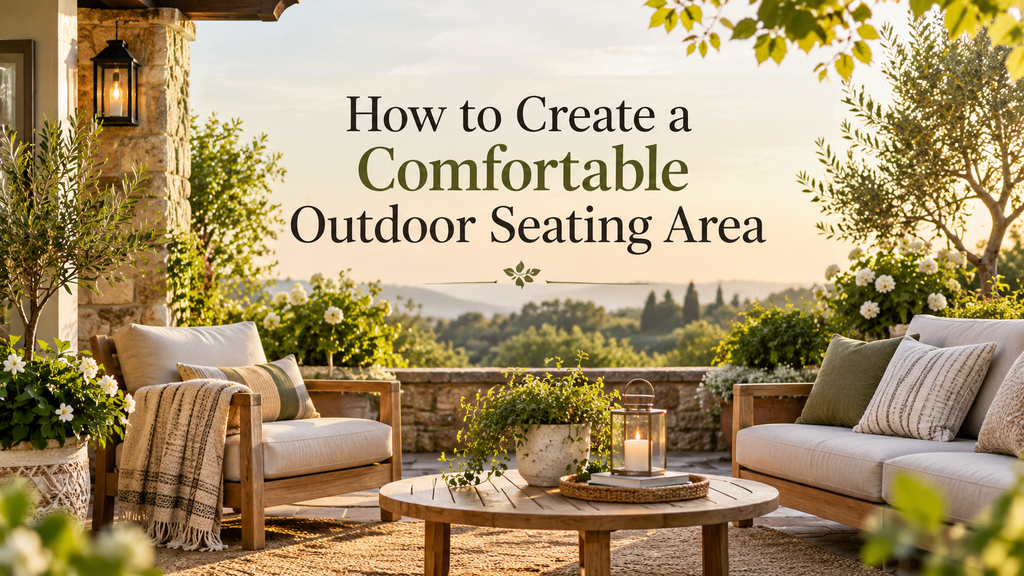
A comfortable outdoor seating area can completely change the way you use your home. A garden, patio, balcony, terrace, or backyard becomes much more useful when there is a peaceful place to sit, relax, talk, read, enjoy tea, or spend time with family. You do not need a very large space or an expensive setup to create something beautiful. With careful planning, suitable furniture, shade, lighting, and a few decorative touches, almost any outdoor space can become welcoming and practical.
When I think about designing an outdoor seating area, comfort always comes first. A space may look stylish in photographs, but if the chairs are uncomfortable or the area becomes too hot during the day, people will not enjoy using it. The best outdoor seating areas balance appearance, comfort, durability, and everyday usefulness.
Choose the Right Location
The first step in creating a comfortable outdoor seating area is choosing the right location. Before buying furniture, spend some time observing your outdoor space.
Notice where sunlight falls during different parts of the day. Some areas may receive strong afternoon sun while others stay shaded. Also pay attention to wind, nearby trees, privacy, noise, and the view.
If you enjoy sitting outdoors in the evening, choose a location that feels peaceful and is easy to access from the house. A seating area close to the kitchen can also be convenient when serving food or drinks.
For smaller gardens or patios, even a quiet corner can work well. You do not always need to place furniture in the center of the space. A seating area near a wall, fence, or garden bed often feels more private and comfortable.
Decide How You Want to Use the Space
Before choosing furniture, think about how you want to use your outdoor seating area.
Some people want a quiet place for reading and drinking coffee. Others want an area where family members can sit together. You may also want a space for entertaining guests, enjoying meals, or relaxing in the evening.
The purpose of the space will help you decide what type of seating is best.
For example, a small table with two comfortable chairs may be perfect for a balcony. A larger family garden may need an outdoor sofa, several chairs, and a central table. If you often serve meals outside, dining chairs and a proper outdoor dining table may be more practical.
Planning the purpose of the area prevents you from filling the space with furniture that you rarely use.
Choose Comfortable Outdoor Furniture
Furniture is the most important part of any comfortable outdoor seating area.
When choosing outdoor chairs or sofas, do not focus only on appearance. Think about how they feel when you sit in them. Chairs with supportive backs and comfortable cushions are usually more enjoyable for long periods.
Outdoor sofas can create a relaxed living room feeling, especially on patios and covered terraces. Benches are useful when you need seating for several people without using too much space.
Materials are also important.
Wooden furniture gives an outdoor area a warm and natural appearance. Metal furniture can look elegant and is usually strong. Wicker and rattan style furniture can create a softer and more relaxed atmosphere.
Whatever material you choose, make sure it is suitable for outdoor conditions.
Furniture that is designed for outdoor use is generally better able to handle sunlight, moisture, dust, and changing temperatures.
Add Soft Cushions
Cushions are one of the easiest ways to make outdoor seating more comfortable.
A simple wooden or metal chair can become much more inviting with a padded seat cushion. Outdoor sofas can also feel more luxurious when cushions provide proper back support.
Choose cushions made from materials that are suitable for outdoor use. They should be able to handle moisture and sunlight better than ordinary indoor cushions.
You can also use decorative pillows to add personality to the seating area. Natural colors such as beige, green, cream, brown, or soft gray often work beautifully outdoors.
Bright colors can also be used if you want the space to feel more cheerful.
However, avoid adding too many cushions because they can make seating feel crowded. A balanced arrangement usually looks cleaner and is easier to maintain.
Provide Enough Shade
Shade is essential if you want your outdoor seating area to remain comfortable during warm weather.
Sitting in direct sunlight for a long time can quickly become unpleasant. Fortunately, there are many simple ways to create shade.
A large outdoor umbrella is one of the easiest options. It can be moved or adjusted depending on the direction of the sun.
Pergolas are another attractive option for larger patios and gardens. They can provide partial shade while also giving the seating area a clear structure.
Trees can also create natural shade. If you already have a mature tree in your garden, placing seating nearby can make the area feel peaceful and connected to nature.
Shade sails, covered patios, climbing plants, and simple fabric canopies may also work well depending on your space.
The goal is to create enough protection from strong sunlight without making the area feel dark or closed.
Add a Practical Outdoor Table
A seating area becomes more useful when there is somewhere to place drinks, books, snacks, phones, or decorative items.
A coffee table works well with outdoor sofas and lounge chairs. Small side tables are useful in compact spaces because they can be placed beside individual chairs.
For dining areas, choose a table that provides enough room for the number of people who normally use the space.
Make sure there is also enough walking room around the furniture. Outdoor spaces can quickly feel crowded when the table is too large.
A simple table made from weather resistant materials can provide both function and style.
Improve Privacy
Privacy can make an outdoor seating area feel much more relaxing.
If your garden or patio is visible from neighboring properties or a busy street, you may not feel completely comfortable using it.
Plants are one of the most attractive ways to improve privacy naturally.
Tall shrubs, bamboo, climbing plants, hedges, and small trees can create a soft visual screen. Large planters can also help separate the seating area from other parts of the garden.
Wooden screens, fences, trellises, and outdoor curtains are other useful options.
You do not need to completely close the area. Even partial privacy can make the space feel more peaceful and personal.
Include Plants Around the Seating Area
Plants help outdoor seating areas feel fresh, natural, and welcoming.
Place pots around the edges of the seating area rather than filling every available space. This keeps the area open while still providing greenery.
You can use flowering plants for color, herbs for fragrance, or evergreen plants for year round interest.
Large planters can help define the seating area, while smaller pots can be placed on tables or shelves.
If you have limited space, vertical planters or hanging baskets can add greenery without taking up valuable floor space.
Try to choose plants that are suitable for the amount of sunlight the area receives. Healthy plants always improve the appearance of an outdoor space.
Create Comfortable Lighting
Good lighting allows you to use your outdoor seating area after sunset.
Soft lighting usually works better than very bright lights because it creates a calm and relaxing atmosphere.
String lights can be placed along a fence, pergola, or wall. Solar lights are also useful because they do not require complicated wiring.
Lanterns can add a decorative touch to tables or corners. Wall lights may be useful near doors or covered patios.
Try to combine practical lighting with softer decorative lighting.
Paths and steps should always be visible for safety, while the seating area itself can have warmer, gentler light.
Use an Outdoor Rug
An outdoor rug can help make a seating area feel more complete.
It visually connects the furniture and creates the feeling of an outdoor room. Rugs can also make hard patio surfaces feel softer and more comfortable.
Choose a rug that is specifically designed for outdoor conditions. These rugs are usually easier to clean and can handle moisture better than indoor rugs.
The rug should be large enough to fit comfortably under the main furniture pieces.
Simple patterns and natural colors can create a calm appearance, while stronger patterns can give the space more personality.
Keep Enough Space for Movement
One common mistake when creating an outdoor seating area is adding too much furniture.
Comfort is not only about soft cushions. It is also about having enough space to move easily.
People should be able to walk around chairs, reach the table, and enter or leave the area without bumping into furniture.
In small outdoor spaces, choose fewer pieces of furniture with practical designs.
Folding chairs, compact benches, nesting tables, and lightweight furniture can work especially well because they can be moved when necessary.
An open and uncluttered layout often feels more relaxing than a crowded one.
Protect the Area From Weather
Outdoor furniture lasts longer when it is properly protected.
If possible, place furniture under some form of shelter. During heavy rain or long periods of bad weather, cushions can be stored indoors or inside a waterproof storage box.
Furniture covers can also provide useful protection from dust, rain, and sunlight.
Wooden furniture may need occasional treatment depending on the material. Metal furniture should be checked for rust, while fabric cushions should be cleaned regularly.
A little maintenance can keep your outdoor seating area looking attractive for many years.
Add Personal Decorative Touches
Once the main furniture is arranged, add a few personal touches to make the outdoor seating area feel like part of your home.
You might add decorative cushions, lanterns, small sculptures, plant pots, candles, or a simple centerpiece.
A tray on the table can help organize small items while also adding style.
You can also include outdoor artwork or decorative wall pieces if the seating area is beside a wall.
Try not to overdecorate. Outdoor spaces often look best when the design feels natural and simple.
Think About Different Seasons
A comfortable outdoor seating area should also work during different seasons.
During summer, shade and airflow are important. In cooler weather, blankets and warm cushions can make the area more comfortable.
If your climate allows it, an outdoor fire feature can create warmth and make the seating area enjoyable during cooler evenings. Always follow local safety rules and keep any heat source at a safe distance from furniture and plants.
You can also change small decorative elements throughout the year.
Light fabrics and colorful flowers may suit warmer months, while thicker cushions and warmer textures can create a cozy atmosphere during cooler seasons.
Keep the Area Clean and Organized
Even the most beautiful outdoor seating area can lose its appeal if it becomes dusty or cluttered.
Regular cleaning does not need to be difficult.
Wipe tables and chairs when dust begins to collect. Sweep the floor or patio surface regularly. Remove fallen leaves from cushions and plant pots.
Outdoor cushions should be washed or cleaned according to their care instructions.
Keeping a storage box nearby can also be useful for cushions, blankets, gardening tools, and other small items.
A tidy seating area always feels more comfortable and inviting.
Create a Natural Connection With the Garden
A successful outdoor seating area should feel connected to the rest of the outdoor space.
Instead of treating the furniture as something separate from the garden, try to blend it with the surroundings.
Use plants, natural materials, and similar colors throughout the area.
For example, wooden furniture may work beautifully beside green plants and stone pathways. Neutral cushions can help colorful flowers stand out.
You can also position chairs so that people can enjoy a pleasant garden view.
Small details like these can make the seating area feel more peaceful and thoughtfully designed.
Final Thoughts
Creating a comfortable outdoor seating area is mainly about understanding how you want to use the space and designing it around everyday comfort. Start with the right location, choose supportive outdoor furniture, provide shade, and leave enough room for movement.
Then add practical details such as tables, lighting, cushions, plants, and privacy screens.
You do not need an expensive garden makeover to create a relaxing outdoor environment. Even a small balcony or patio can become an inviting place with the right furniture and a few carefully chosen details.
The best outdoor seating area is one that encourages you to spend more time outside. When the space feels comfortable, peaceful, and easy to maintain, it naturally becomes a favorite part of the home.


