Doors and windows are some of the most frequently used parts of a home, yet they often receive very little attention until something goes wrong. We open and close them every day without thinking much about their condition. Over time, regular use, moisture, dust, sunlight, temperature changes, and general wear can affect how smoothly they work. A door may begin to stick, a window may become difficult to open, or small gaps may develop around the frames.
Learning a few practical tips for maintaining doors and windows can help prevent these problems. Regular care can improve their appearance, extend their useful life, make the home more comfortable, and even support better energy efficiency. Most maintenance tasks are simple and can be handled without expensive equipment.
The key is to inspect doors and windows regularly instead of waiting until damage becomes serious.
Inspect Doors and Windows Regularly
One of the simplest ways to keep doors and windows in good condition is to inspect them several times throughout the year. Small problems are usually easier and less expensive to correct when they are noticed early.
Look carefully around the frames, hinges, handles, locks, glass, and seals. Check whether the door or window opens smoothly and closes completely.
Pay attention to unusual sounds such as squeaking, grinding, or rubbing. These sounds can indicate that a hinge needs lubrication or that the frame has moved slightly.
You should also look for cracks, loose screws, damaged paint, moisture marks, or gaps around the edges.
A quick inspection only takes a few minutes but can prevent a minor problem from developing into a major repair.
Keep Frames Clean
Dust and dirt naturally collect around door and window frames. When this buildup is ignored for a long time, it can affect both appearance and operation.
Use a soft cloth or brush to remove loose dust from frames, tracks, and corners. A mild cleaning solution can usually be used for deeper cleaning, depending on the frame material.
Wood, aluminum, vinyl, and other materials may have different cleaning requirements, so avoid using harsh chemicals unless they are suitable for the surface.
Window tracks deserve special attention because dirt can collect inside them and make windows harder to slide.
Vacuuming the tracks before wiping them can make cleaning much easier.
Regular cleaning also gives you an opportunity to notice small cracks, loose parts, or early signs of moisture damage.
Lubricate Hinges and Moving Parts
Squeaking doors are often caused by dry hinges. Fortunately, this is usually a very simple problem to fix.
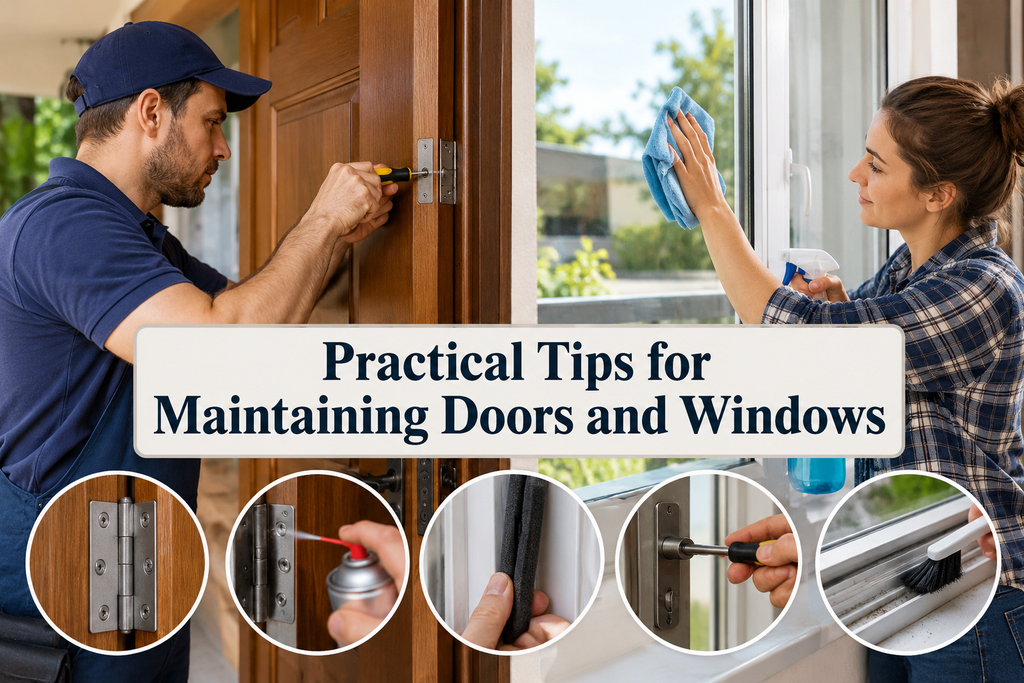
Applying a small amount of suitable lubricant to hinges can reduce friction and help the door move smoothly. After applying it, open and close the door several times so the lubricant reaches the moving parts.
Windows may also contain moving components that need occasional attention. Locks, handles, rollers, and other mechanisms can become stiff as dust and age affect them.
Avoid applying excessive lubricant because too much can attract dirt.
A small amount is usually enough to keep the moving parts operating properly.
If a hinge remains noisy after lubrication, check whether its screws have become loose.
Tighten Loose Screws and Hardware
Constant opening and closing creates movement that can gradually loosen screws.
Check hinges, handles, locks, catches, and other hardware periodically. If something feels loose, tighten it carefully before it becomes damaged.
A loose door handle may seem like a minor inconvenience, but continued use can place unnecessary pressure on the internal mechanism.
Loose hinges can also cause a door to hang incorrectly. This may eventually make it rub against the floor or frame.
Be careful not to tighten screws too aggressively. Excessive force can damage the screw hole or the surrounding material.
When a screw repeatedly becomes loose, the hole itself may need repair.
Check for Gaps Around Frames
Small gaps around doors and windows can allow outdoor air to enter the home. These openings may make rooms less comfortable and place extra pressure on heating or cooling systems.
Stand near closed doors and windows and check whether you can feel air entering around the edges.
You can also inspect the seals visually.
Weather sealing materials may become hard, cracked, loose, or compressed over time. Replacing worn sealing materials can improve the fit around the frame.
Proper sealing is especially important around exterior doors and frequently used windows.
However, ventilation should still be maintained where it is intentionally required. The goal is to reduce unwanted gaps rather than completely block necessary airflow.
Protect Wooden Doors and Window Frames
Wood can remain attractive for many years when it is properly cared for. At the same time, it can be affected by moisture, strong sunlight, and changing temperatures.
Inspect wooden surfaces for cracks, peeling paint, discoloration, or soft areas.
Paint and protective finishes help create a barrier between the wood and the environment. If the finish begins to fail, renewing it before moisture reaches the wood can prevent more serious deterioration.
Keep wooden surfaces clean and dry whenever possible.
Water should not be allowed to remain around the bottom of wooden doors or window frames for long periods.
If you notice areas that appear unusually soft or damaged, investigate the cause quickly.
Pay Attention to Moisture
Moisture is one of the most common causes of problems around doors and windows.
Rainwater may enter through damaged seals, while condensation can collect on glass and nearby surfaces when indoor humidity is high.
Small amounts of temporary condensation may not always indicate a serious problem, but frequent moisture should not be ignored.
Wipe away water and try to determine why it is appearing.
Check exterior drainage, window seals, roof areas, and nearby walls if necessary.
Persistent moisture may eventually damage paint, wood, plaster, and other materials.
Good ventilation can also help reduce indoor condensation, especially in kitchens, bathrooms, and other humid areas.
Clean Window Glass Properly
Clean glass improves natural light and makes the entire home look better.
Use a suitable glass cleaner or a mild cleaning mixture with a soft, clean cloth. Avoid rough materials that could scratch the surface.
Cleaning windows on a cloudy or cooler part of the day can sometimes make the process easier because cleaning liquid is less likely to dry too quickly.
Remember to clean both sides of the glass when they are safely accessible.
While cleaning, examine the glass closely for cracks or damaged edges.
Even a small crack deserves attention because changes in temperature or accidental pressure can sometimes make it worse.
Maintain Window Tracks
Sliding windows depend heavily on clean tracks.
Dust, sand, insects, leaves, and other debris may collect inside these areas. When enough dirt builds up, the window becomes difficult to move.
Start by removing loose debris with a vacuum or soft brush. Then wipe the track with a damp cloth.
Corners can often be cleaned using a small brush.
After cleaning, test the window several times. It should move smoothly without requiring excessive force.
Forcing a window that refuses to move can damage rollers, handles, or locking mechanisms.
If cleaning does not solve the problem, the window may need adjustment or professional repair.
Check Door Alignment
Doors can gradually move out of alignment because of loose hinges, changes in the building, moisture, or normal wear.
A properly aligned door should open and close without excessive resistance.
If the door rubs against the frame, examine the hinges first. Tightening loose hinge screws may solve the issue immediately.
Also check whether the gap around the door appears even.
If the door has become severely misaligned, avoid repeatedly forcing it closed. This can damage the frame, lock, or door surface.
More complicated alignment problems may require professional adjustment.
Test Locks and Handles
Locks and handles are important for both convenience and security.
Test each exterior door and accessible window regularly. The lock should operate smoothly without excessive force.
If a key becomes difficult to turn, do not automatically force it. Check whether the door is properly aligned because pressure on the locking mechanism may be causing the problem.
Handles should feel secure and return to their normal position correctly.
Loose, damaged, or unreliable locks should be repaired promptly.
Good maintenance helps these components remain dependable during everyday use.
Protect Doors From Water
Exterior doors are exposed to weather conditions more than interior doors.
Check whether rainwater collects near the entrance. Proper drainage can reduce long term moisture exposure around the door frame.
The lower part of the door deserves special attention because this area can be affected by rain, cleaning water, and damp flooring.
Protective finishes may need occasional renewal, especially on wooden doors exposed to strong sunlight or frequent rain.
Keeping water away from the frame is often easier than repairing moisture damage later.
Avoid Slamming Doors
Simple habits can make a significant difference in the life of doors and windows.
Repeatedly slamming doors places unnecessary stress on hinges, frames, handles, locks, and glass panels.
Teach family members to close doors gently whenever possible.
Strong drafts can also cause doors to slam unexpectedly. Door stops or suitable closing mechanisms may help in areas where this happens frequently.
Windows should also be opened and closed carefully.
If a window requires excessive force, investigate the cause rather than pushing harder.
Gentle use reduces wear and helps fittings remain properly aligned.
Inspect Exterior Sealant
Many windows and doors use sealant around their exterior edges to help prevent water from entering the building.
Over time, this material may crack, shrink, or separate from the surface.
Walk around the outside of your home occasionally and inspect these areas.
Small gaps should be addressed before heavy rain has an opportunity to enter.
Water entering around a frame can sometimes remain hidden inside a wall for a long time before obvious damage appears.
For this reason, exterior inspection is an important part of maintaining doors and windows.
Keep Drainage Openings Clear
Some modern windows contain small drainage openings that allow collected water to escape.
These openings can become blocked by dust or debris.
Check them occasionally and keep them clear according to the design of the window.
Blocked drainage may cause water to remain inside areas where it should not collect.
Avoid modifying or sealing drainage openings unless you fully understand their purpose.
They may be an important part of the window system.
Repair Minor Damage Early
One of the best practical tips for maintaining doors and windows is simple: do not ignore small problems.
A tiny crack in paint, a loose handle, a worn seal, or a squeaking hinge may not seem urgent. However, small defects often become larger when they are exposed to daily use and changing weather.
Early repairs are usually simpler and more affordable.
Create the habit of fixing small issues whenever you notice them.
This approach also helps keep your home looking well cared for.
Know When Professional Help Is Needed
Many basic maintenance tasks can be handled at home, but certain problems should be inspected by an experienced professional.
Consider professional help when a frame appears badly damaged, glass is broken, a door will not align properly, water repeatedly enters around a window, or a security lock becomes unreliable.
Professional assistance may also be useful when structural movement appears to be affecting several doors or windows.
Trying to force or modify complicated components without the right knowledge can sometimes create additional damage.
Knowing when to seek help is part of responsible home maintenance.
Create a Simple Maintenance Routine
Maintaining doors and windows becomes much easier when it is treated as a regular household task.
You do not need to inspect everything every week.
A seasonal routine is often enough for most homes.
During each inspection, clean the frames, test the locks, check the seals, tighten loose fittings, inspect wooden surfaces, and look for moisture.
After severe rain, strong winds, or extreme weather, it can also be useful to perform an additional inspection.
Keeping a small record of repairs can help you remember which areas may need future attention.
Final Thoughts
Doors and windows play an important role in comfort, security, ventilation, natural light, and the overall appearance of a home. Because they are used so frequently, gradual wear is unavoidable. However, regular maintenance can slow that wear and help prevent unnecessary repairs.
Practical door and window maintenance does not have to be complicated. Cleaning frames, lubricating hinges, tightening hardware, checking seals, controlling moisture, protecting wooden surfaces, and repairing minor damage early can make a noticeable difference.
The most important habit is paying attention. When doors and windows begin to feel different, make unusual sounds, show signs of moisture, or become difficult to operate, investigate the issue instead of ignoring it.
A few minutes of care at the right time can save hours of repair work later. With a simple maintenance routine and gentle everyday use, your doors and windows can continue to function smoothly and keep your home comfortable for many years.