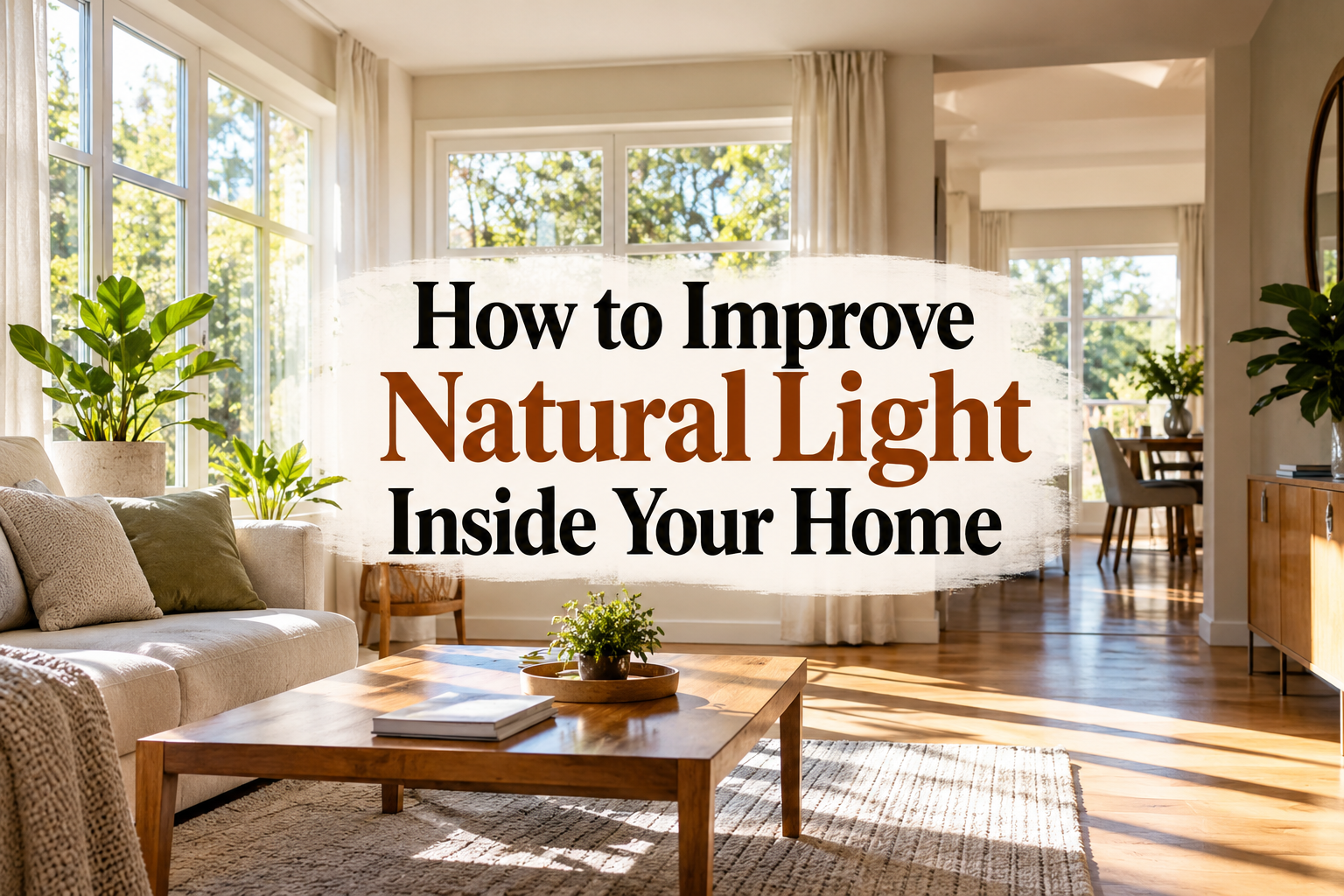
Natural light can completely change the way a home feels. A room that receives plenty of daylight often looks more open, clean, comfortable, and welcoming. It can also make colors appear more natural and reduce the need to keep lights switched on during the day. Many homeowners think that improving natural light requires large windows or expensive renovation work, but that is not always true. In many cases, simple changes in furniture placement, wall colors, window treatments, and interior design can make a noticeable difference.
If your home feels dark even during the daytime, you can improve the situation by understanding how light enters a room and how it moves across different surfaces. The goal is not only to bring in more sunlight but also to help that light travel deeper into the room. With a few practical ideas, even small or poorly positioned rooms can feel brighter.
Keep Windows Clean
One of the easiest ways to improve natural light inside your home is to keep your windows clean. Dust, dirt, fingerprints, and outdoor pollution can reduce the amount of sunlight entering a room. This may not seem like a major problem, but a cloudy layer on glass can make a noticeable difference.
Clean both the inside and outside surfaces of your windows whenever possible. Pay attention to window corners and frames because dirt often collects in these areas. Clear glass allows light to enter without unnecessary obstruction.
You should also make sure that bushes, tree branches, or large outdoor objects are not blocking important windows. A little trimming around the outside of your home can sometimes make a room feel much brighter.
Choose Light Colored Walls
Wall color has a strong influence on how bright a room appears. Dark colors tend to absorb light, while lighter colors reflect it. This means that choosing soft and light shades can help natural light move around the room.
White is a popular choice, but you do not have to paint every room pure white. Cream, light beige, pale gray, soft blue, and warm neutral shades can also work very well. The best choice depends on the style of your home and the direction of the natural light.
Rooms that receive limited sunlight usually benefit from warmer light colors. These shades can make the space feel comfortable instead of cold. If your room already receives a lot of direct sunlight, cooler colors may work equally well.
Use Mirrors to Reflect Daylight
Mirrors are one of the most effective decorating tools for improving natural light. When placed correctly, a mirror can reflect sunlight from a window and spread it into darker areas.
Try placing a large mirror on a wall opposite or near a window. The mirror can help bounce daylight around the room and create the appearance of additional space.
You can also use several smaller mirrors as decorative pieces. Reflective furniture, glass surfaces, and polished accessories can create a similar effect. The important point is to position these items where they can catch natural light.
Avoid Heavy Curtains
Thick curtains may provide privacy and warmth, but they can also block a large amount of daylight. If your goal is to make your home brighter, consider using lighter window treatments.
Sheer curtains are a useful option because they allow sunlight to enter while still providing some privacy. Light colored blinds can also work well because they can be adjusted throughout the day.
If you prefer heavy curtains for nighttime privacy, keep them fully open during daylight hours. Make sure the curtain rod extends beyond the width of the window so the fabric does not cover the glass when the curtains are open.
Arrange Furniture Carefully
Furniture placement can have a major effect on natural light. Large sofas, cabinets, bookshelves, and other tall pieces can block windows or prevent daylight from reaching the center of a room.
Try to keep large furniture away from windows whenever possible. Low furniture usually works better near natural light sources because it does not create as much obstruction.
Walk through each room during the day and notice where shadows appear. You may discover that simply moving a chair, shelf, or cabinet can allow more light to spread through the space.
Choose Furniture in Lighter Colors
Furniture color also affects how bright a room feels. Dark furniture absorbs more light, while light furniture reflects it.
You do not need to replace everything in your home, but you can introduce lighter tones through cushions, rugs, bed covers, tablecloths, and other soft furnishings. These small changes can improve the overall brightness of a room without requiring a major redesign.
Natural wood in light shades can also work well. Materials such as oak, pine, and bamboo can help create a warm and airy look.
Use Glossy and Reflective Surfaces Carefully
Surfaces with a little shine can help reflect natural light. Glossy tiles, glass tables, polished countertops, and metallic accessories can all help brighten a room.
However, too many shiny surfaces can make an interior feel uncomfortable or overly reflective. The goal should be balance.
You can combine matte walls with a few reflective details. For example, a glass coffee table, polished cabinet handles, or a glossy backsplash can help spread light without making the room feel too bright.
Keep Window Areas Clear
Many people place decorative objects, plants, or furniture directly in front of windows. While these items may look attractive, they can reduce natural light.
Try to keep the area immediately around your windows as open as possible. Small plants may be fine, but large indoor plants can block significant amounts of daylight.
If you love indoor greenery, place larger plants beside the window instead of directly in front of it.

Use Glass Doors and Internal Windows
If you are planning a home improvement project, glass can help natural light move between rooms. Glass doors are especially useful between living rooms, hallways, kitchens, and dining areas.
Frosted glass can provide privacy while still allowing light to pass through. Clear glass works well in areas where privacy is less important.
Internal glass panels can also be used to share natural light between bright and dark spaces. This can be particularly useful in homes where hallways or central rooms do not have exterior windows.
Consider Skylights
Skylights can bring natural light into areas that regular windows cannot reach. They are especially useful in bathrooms, kitchens, staircases, lofts, and central hallways.
A properly positioned skylight can provide daylight for many hours because it receives light from above. However, skylight installation should be planned carefully to avoid problems with heat, glare, or water leakage.
If you are considering this option, it is wise to use a professional installer and choose the correct size for the room.
Improve Light in Hallways
Hallways are often among the darkest parts of a home because they may have few or no windows. You can make them brighter by using light colored paint, mirrors, glass doors, and reflective flooring.
If a hallway connects to a brighter room, keeping the doorway open during the day can also help natural light travel farther.
Another useful idea is to place a mirror near the end of the hallway. This can reflect available light and make the area feel less enclosed.
Choose Flooring That Reflects Light
Flooring is another surface that can help improve natural light. Light colored wood, pale tiles, and neutral flooring usually reflect more daylight than very dark surfaces.
If replacing the floor is not practical, use a light colored rug. This is an affordable way to brighten the center of a room.
The texture of the floor also matters. Slightly polished surfaces can reflect more light, but extremely shiny flooring may create unwanted glare.
Trim Outdoor Plants and Trees
Natural light problems sometimes begin outside the home. Trees, hedges, climbing plants, and shrubs can gradually grow in front of windows and reduce daylight.
Regular trimming can improve both natural light and the appearance of your property. You do not need to remove healthy plants completely. Careful pruning is often enough to open the view and let more sunlight reach the windows.
Always consider safety when trimming large trees. Professional help may be needed if branches are close to the roof or electrical lines.
Use Open Shelving
Large solid cabinets can make a room feel heavy and block the movement of light. Open shelving can create a lighter visual effect and allow more daylight to pass through the room.
This idea is particularly useful in kitchens, home offices, and small living spaces. You do not need to replace all your cabinets. A combination of closed storage and open shelves can provide both practicality and brightness.
Reduce Visual Clutter
A cluttered room often feels darker because too many objects create shadows and visual heaviness. Keeping surfaces organized can make the space feel more open and allow natural light to become more noticeable.
Try to keep window areas, tables, and shelves reasonably clear. Use storage baskets, cabinets, or drawers to organize smaller items.
A simple room does not have to feel empty. The goal is to give light enough space to move around.
Use Light Colored Window Frames
Window frames are often overlooked, but their color can influence brightness. Dark frames create contrast and may make windows appear smaller. Light frames can help the window area feel more open.
If replacing the windows is not possible, painting suitable interior frames in a lighter color may improve the appearance. Always use paint that is appropriate for the frame material.
Make Use of Open Floor Plans
Open floor plans allow daylight to move between different areas of the home. Removing unnecessary visual barriers can improve brightness, especially in smaller houses.
This does not always mean removing walls. Sometimes wider doorways, open shelving, or glass partitions can create a similar effect.
Before making structural changes, always consult a qualified professional. Some walls may support important parts of the building.
Pay Attention to Window Direction
The direction your windows face affects the type of natural light you receive.
East facing windows usually receive morning sunlight. West facing windows receive stronger light later in the day. South facing windows often receive longer periods of daylight, while north facing windows may provide softer and more consistent light.
Understanding this can help you choose furniture, curtains, paint colors, and room functions more effectively.
For example, a room with soft light may benefit from warm wall colors, while a very sunny room may need adjustable blinds to control glare.
Keep Interior Doors Open During the Day
A very simple way to improve natural light is to keep interior doors open when privacy is not required. This allows daylight from brighter rooms to reach hallways and nearby spaces.
This technique works especially well in smaller homes where rooms are close together.
If you prefer closed doors, consider doors with glass panels in suitable areas. They can maintain separation while still allowing light to pass through.
Use Natural Light as Part of Your Interior Design
Instead of treating natural light as something outside your control, think of it as part of your interior design. Notice how sunlight changes throughout the day and arrange your rooms around it.
A reading chair can be placed near a bright window. A dining table may look more inviting in an area with morning or afternoon light. Indoor plants can be placed where they receive suitable daylight without blocking the window.
When you understand how light behaves in your home, you can make better decorating decisions.
Final Thoughts
Improving natural light inside your home does not always require expensive construction work. Small changes can make a surprisingly large difference. Cleaning windows, using lighter colors, placing mirrors carefully, choosing suitable curtains, and rearranging furniture can all help daylight travel farther into your rooms.
You can also improve brightness by reducing clutter, trimming outdoor plants, using reflective surfaces, and keeping interior doors open. Larger improvements such as skylights, glass doors, and internal windows can provide even more natural light when your budget allows.
A brighter home often feels larger, fresher, and more comfortable. The best approach is to observe how sunlight enters your home at different times of the day and then make changes that help you use that light more effectively. By combining practical design choices with simple maintenance, you can create a home that feels naturally bright and welcoming throughout the day.