Growing fresh herbs at home is one of the simplest and most rewarding ways to bring gardening into your everyday life. You do not need a large backyard, expensive equipment, or years of gardening experience. A sunny windowsill, a balcony, a small patio, or even a bright corner of your kitchen can provide enough space to grow several useful herbs.
Fresh herbs can completely change the flavor of homemade meals. A few basil leaves can brighten a simple pasta dish, fresh mint can make drinks more refreshing, and parsley can add color and freshness to soups, salads, and sauces. When herbs are growing only a few steps away from your kitchen, you can harvest exactly what you need instead of buying a large bundle that may eventually go to waste.
Learning how to grow fresh herbs at home is also a good introduction to gardening. Herbs are generally easy to manage, many grow quickly, and most do not require complicated care. Once you understand their basic needs, you can enjoy a regular supply of fresh leaves throughout much of the year.
Choose the Right Herbs to Grow
The first step is choosing herbs that suit your cooking habits and growing space. There is little benefit in growing large amounts of an herb that you rarely use. Think about the flavors you enjoy and the dishes you prepare regularly.
Basil is an excellent choice for beginners. It grows quickly in warm conditions and works well in pasta, salads, sauces, and many other dishes. Mint is another easy herb, although it grows so strongly that keeping it in its own container is usually a good idea.
Parsley is useful in many recipes and can continue producing leaves for a long period when harvested correctly. Coriander is popular in fresh dishes, curries, sauces, and salads, although it often prefers cooler conditions compared with basil.
Rosemary and thyme are excellent choices if you want herbs that require less frequent watering. They naturally prefer good drainage and plenty of sunlight.
You can also try oregano, chives, sage, dill, or other herbs that match your cooking style. Beginners may find it easier to start with three or four varieties and add more once they understand the basics.
Find a Sunny Growing Location
Light is one of the most important factors when growing herbs at home. Most culinary herbs grow best when they receive several hours of direct sunlight each day.
A sunny kitchen window can be a convenient location because the herbs remain close to where you prepare food. South facing or west facing windows often provide strong light, although the best position depends on your home.
Balconies, terraces, and patios can also provide excellent conditions. Before placing your plants, observe the area during the day. Notice how many hours of direct sunlight it receives and whether nearby walls or buildings create long periods of shade.
Basil, rosemary, thyme, oregano, and sage generally enjoy plenty of sunshine. Parsley and mint can tolerate slightly less light, although they still perform better in bright conditions.
If indoor plants begin producing weak, thin, or unusually stretched stems, insufficient light may be the reason. Moving them closer to a brighter window can often improve their growth.
Select Containers With Good Drainage
Growing herbs in containers gives you excellent control over their location and growing conditions. Almost any suitable pot can work as long as excess water can drain from the bottom.
Drainage is extremely important because herb roots should not remain in waterlogged soil. Constantly wet soil can reduce the amount of oxygen around the roots and may eventually cause root problems.
Choose containers with drainage holes and place a tray underneath indoor pots to protect your furniture and windowsills.
The size of the container also matters. Very small pots dry quickly and may restrict root development. Larger containers provide more soil, which helps moisture levels remain more stable.
Individual containers are useful when growing herbs with different watering requirements. For example, rosemary prefers relatively dry soil, while basil usually appreciates more consistent moisture. Keeping them in separate pots makes their care easier.
Mint should almost always have its own container. Its roots spread quickly and can compete strongly with neighboring plants.
Use Good Quality Potting Soil
Healthy herb plants begin with healthy roots, and good soil plays a major role in root development.
Avoid filling indoor containers with heavy soil taken directly from the garden. Garden soil can become compacted inside pots, making drainage and air movement more difficult.
A good quality potting mixture is usually a better choice. It should hold enough moisture for the roots while allowing excess water to escape easily.
Herbs such as rosemary, thyme, oregano, and sage prefer especially good drainage. You can improve drainage by using a potting mixture designed for containers and avoiding excessive watering.
Fresh potting soil also provides a clean environment for young plants and makes container gardening easier to manage.
Decide Between Seeds and Young Plants
You can start your home herb garden from seeds or purchase young plants.
Growing herbs from seeds is affordable and enjoyable. Basil, coriander, dill, parsley, and chives can all be grown from seed successfully. However, some varieties take longer to germinate than others.
Read the instructions on the seed packet before planting. Seeds should usually be planted at a suitable depth in moist soil and kept in appropriate temperature conditions until they germinate.
Do not bury tiny seeds too deeply. Small seeds have limited stored energy and may struggle to reach the surface if covered with too much soil.
Buying established herb plants is faster. Garden centers and nurseries often sell young herbs that can immediately be placed in larger containers. This can be helpful if you want to start harvesting sooner.
Both methods can produce a successful herb garden, so your choice depends mainly on your patience, budget, and personal preference.
Water Herbs Carefully
Watering is one of the areas where new gardeners sometimes make mistakes. Many people assume that giving plants extra water is always helpful, but too much water can be just as damaging as too little.
Instead of watering according to a rigid schedule, check the soil first.
Place your finger gently into the upper layer of soil. If it still feels noticeably moist, the plant may not need more water yet. If the soil feels dry, it is probably time to water.
When watering, give the soil enough moisture that a small amount of water begins leaving the drainage holes. Then allow the excess water to drain completely.
Different herbs have different moisture preferences. Basil generally likes consistent moisture but does not want saturated soil. Mint also appreciates moisture, particularly during warm weather.
Rosemary, thyme, oregano, and sage prefer the soil to become somewhat dry between watering sessions.
As you care for your herbs regularly, you will gradually learn how quickly each container dries.
Provide Enough Space for Growth
Small herb plants can look perfectly comfortable when first planted together, but they can become crowded surprisingly quickly.
Crowded plants compete for light, water, nutrients, and root space. Poor air circulation around dense foliage may also create unfavorable growing conditions.
Check your herbs regularly and move them into larger containers when necessary.
If several seedlings germinate close together, thinning them can help the strongest plants develop properly. Removing extra seedlings may feel wasteful, but giving remaining plants enough room usually produces healthier growth.
Spacing becomes especially important for vigorous herbs such as basil and mint.
Feed Herbs Without Overdoing It
Container plants gradually use the nutrients available in their potting soil. Light feeding can support continued growth, particularly when herbs remain in the same container for several months.
However, herbs usually do not need excessive fertilizer.
Too much fertilizer may encourage rapid leafy growth without necessarily producing the strongest flavor. Follow the instructions on the fertilizer product carefully and avoid applying more than recommended.
A balanced fertilizer suitable for edible container plants can be used when needed. Some gardeners also refresh part of the potting mixture periodically to improve growing conditions.
The goal is steady, healthy growth rather than forcing the plants to grow as quickly as possible.
Harvest Herbs Regularly
Regular harvesting can help many herbs become fuller and more productive.
With basil, removing the upper leaves and growing tips encourages branching. Instead of growing as one tall stem, the plant begins producing more side shoots.
Parsley can be harvested by removing mature outer stems while allowing younger growth near the center to continue developing.
For rosemary and thyme, remove small portions as needed without cutting away too much of the plant at once.
Try not to remove most of a plant during a single harvest. Leaves are responsible for capturing light and supporting growth, so the plant needs enough remaining foliage to recover.
Morning can be a convenient time to harvest herbs when the leaves are fresh and firm.
Prevent Herbs From Becoming Weak or Leggy
Sometimes herbs grow tall stems with large spaces between the leaves. This is often described as leggy growth.
Insufficient light is one of the most common causes.
Move the plant to a brighter location if possible. Regular trimming may also encourage more compact growth.
Basil especially benefits from frequent pinching. When flower buds begin appearing, you can remove them if your main goal is continued leaf production.
Rotating indoor containers every few days can also help plants receive more even light instead of constantly leaning toward the window.
Watch for Common Plant Problems
Healthy herbs are usually easy to maintain, but checking them regularly helps you identify problems early.
Look at both sides of the leaves and examine the stems. Watch for unusual discoloration, damaged leaves, sticky surfaces, tiny insects, or webbing.
If you notice an affected leaf, removing it may help prevent a small problem from becoming larger.
Good air movement is also beneficial. Avoid placing many pots so closely together that air cannot move around the foliage.
Watering the soil rather than constantly wetting the leaves can also help maintain better growing conditions.
Indoor herbs may collect dust over time. Gently cleaning the leaves occasionally can keep them looking healthy.
Grow Herbs Indoors Throughout the Year
One of the biggest advantages of a home herb garden is the possibility of extending the growing season.
Outdoor herbs may slow down or stop growing when temperatures become unsuitable. Containers can often be moved indoors when conditions change.
Place indoor herbs near the brightest available window and keep them away from extreme heat or cold.
Growth may slow during periods with shorter daylight hours. This is normal. Reduce watering slightly if the soil takes longer to dry.
Some herbs naturally live longer than others. Rosemary, thyme, oregano, sage, and mint can continue growing for long periods under suitable conditions.
Basil and coriander often have shorter productive cycles, so growing new plants periodically can help maintain a continuous supply.
Create a Simple Kitchen Herb Garden
You do not need dozens of plants to enjoy the benefits of home grown herbs.
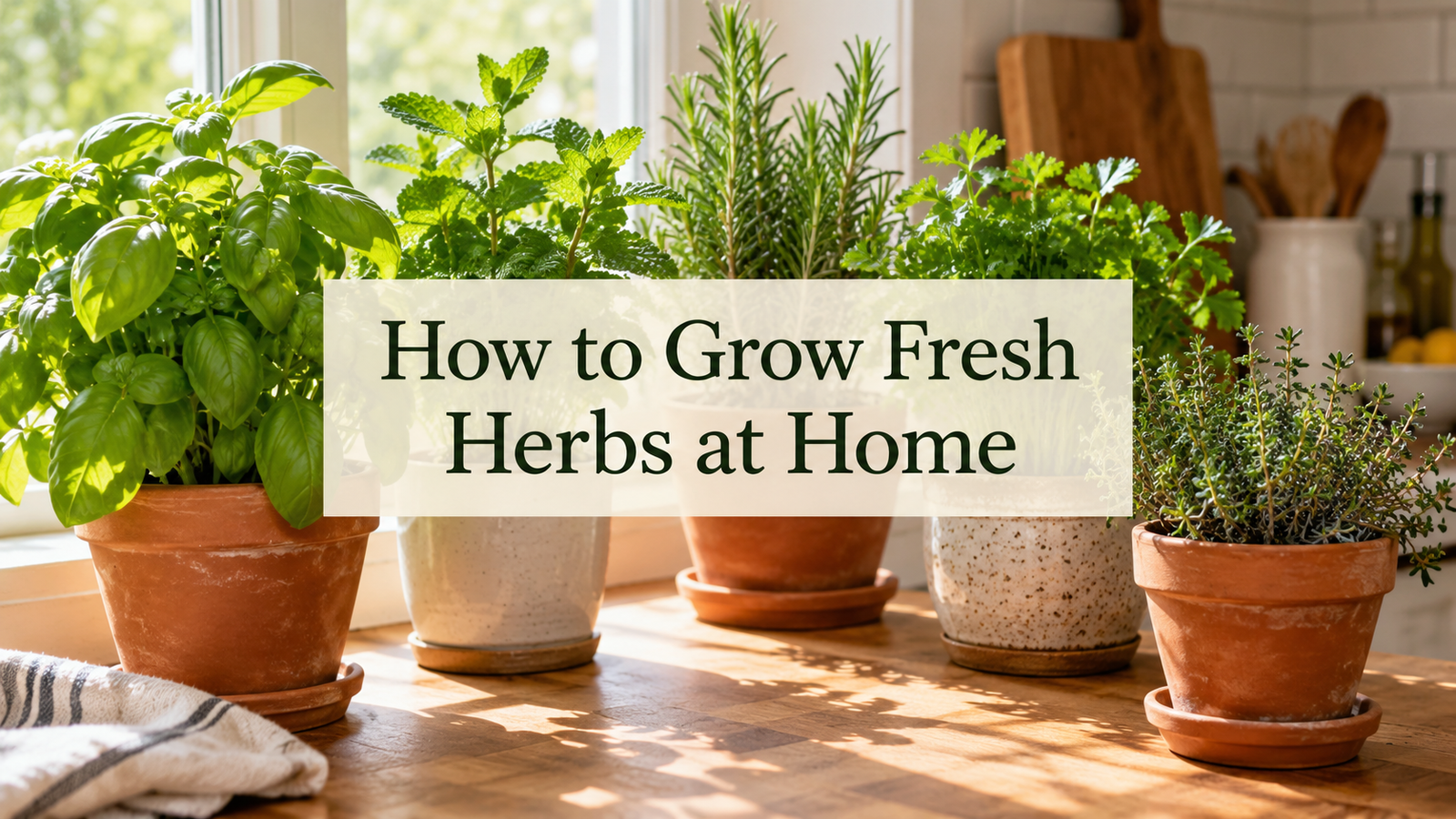
A small kitchen herb garden containing basil, parsley, mint, rosemary, and coriander can provide ingredients for many different meals.
Place the containers where they receive suitable light and where you can easily check them. Keeping herbs visible is useful because you are more likely to notice when they need water, trimming, or harvesting.
Labeling containers can also be helpful, particularly when seedlings are young and look similar.
As your confidence grows, you can experiment with new varieties and learn which herbs perform best in your particular home environment.
Use Fresh Herbs in Everyday Cooking
The greatest reward comes when you begin using your home grown herbs.
Fresh basil works beautifully with tomatoes, pasta, sandwiches, and homemade sauces. Mint can be used in drinks, salads, yogurt dishes, and chutneys. Coriander adds fresh flavor to curries, rice dishes, soups, and sauces.
Rosemary is excellent with roasted vegetables, potatoes, and baked dishes. Thyme works well in soups, sauces, vegetables, and many savory recipes. Parsley can be added to salads, sauces, soups, eggs, and numerous everyday meals.
Harvesting herbs shortly before cooking allows you to enjoy them at their freshest.
You may also discover that having fresh herbs available encourages you to experiment more in the kitchen.
Final Thoughts
Learning how to grow fresh herbs at home does not require a complicated gardening setup. Start with a few herbs you actually enjoy using, provide them with enough sunlight, choose containers with proper drainage, and water according to the condition of the soil.
Pay attention to how each plant responds. Some herbs enjoy consistent moisture, while others prefer slightly drier conditions. Regular harvesting, good air circulation, suitable soil, and adequate light can keep your plants productive and attractive.
Most importantly, do not worry about making everything perfect from the beginning. Gardening becomes easier through observation and experience. Every plant teaches you something about sunlight, water, soil, temperature, and seasonal growth.
A few simple pots can eventually become a useful source of fresh flavor for your kitchen. Whether your herbs are growing on a balcony, windowsill, terrace, or kitchen counter, a home herb garden can make everyday cooking fresher, more enjoyable, and more connected to the food you prepare.