

A well organized kitchen can make everyday life much easier. When everything has a proper place, cooking becomes quicker, cleaning feels less tiring, and finding ingredients does not turn into a frustrating search. Kitchen organization is not only about making cabinets look neat. It is about creating a practical system that works with your daily habits.
Many people assume that an organized kitchen requires expensive cabinets, professional storage systems, or a complete renovation. In reality, some of the most effective kitchen organization ideas are surprisingly simple. A few thoughtful changes can improve how you use your kitchen without changing the entire space.
The best approach is to organize according to how often you use things. Everyday plates, cooking tools, spices, food containers, and cleaning supplies should be easy to reach. Items used occasionally can be stored higher up or farther away.
Here are practical kitchen organization ideas that can help create a cleaner, more efficient, and comfortable space for everyday use.
Start by Removing Things You Do Not Use
Before buying storage baskets or rearranging cabinets, take some time to look at what is already in your kitchen. Most kitchens slowly collect items that are rarely used.
You may have duplicate utensils, damaged containers, old mugs, unused appliances, or expired ingredients taking up valuable space.
Go through one cabinet or drawer at a time. Remove everything and decide whether each item is actually useful.
Keep things that you regularly use or genuinely need. Donate usable items that no longer serve a purpose and safely discard anything that is broken or expired.
This simple process creates more room before you even begin organizing.
Create Zones Based on Kitchen Activities
One of the most practical kitchen organization ideas is dividing the room into functional zones. Instead of storing items wherever space is available, group them according to the activity they support.
For example, create a cooking zone near the stove. Keep cooking utensils, pots, pans, oils, and frequently used spices nearby.
Create a preparation zone around your main countertop. Cutting boards, knives, mixing bowls, and measuring tools can be stored close to this area.
You can also create separate areas for baking, beverages, snacks, cleaning supplies, and food storage.
When related items stay together, you spend less time walking around the kitchen looking for what you need.
Keep Everyday Items Within Easy Reach
Frequently used kitchen items deserve the most convenient storage locations.
Plates, bowls, glasses, and mugs should usually be stored in cabinets that are easy to reach. Cooking utensils should be close to the area where food is prepared.
Less frequently used appliances, serving dishes, or seasonal items can go in higher cabinets.
Think about your normal routine. If you prepare tea every morning, keeping mugs, tea, sugar, and the kettle close together can make the process much smoother.
Good kitchen organization should support your habits rather than force you to change them.
Use Drawers More Efficiently
Kitchen drawers can become messy very quickly when different tools are mixed together. Drawer organizers are useful because they create separate spaces for different categories.
A cutlery tray works well for forks, spoons, and knives. Larger dividers can separate spatulas, measuring spoons, peelers, scissors, and other cooking tools.
You do not always need specialized organizers. Small containers can also be placed inside drawers to create simple compartments.
Avoid filling drawers too tightly. When every drawer is packed, removing one item often creates more disorder.
Leave enough space so that everything can be returned easily after use.
Organize Food Containers and Lids
Food storage containers are useful, but they can easily become one of the messiest parts of the kitchen.
Start by matching every container with its correct lid. Remove containers that are cracked, stained, or missing a matching piece.
Stack containers according to size whenever possible. Store lids vertically in a basket, rack, or divided container.
Keeping lids upright makes it much easier to find the right one without removing everything from the cabinet.
Try to keep all food containers in one location instead of spreading them across several cabinets.
Arrange the Pantry by Category
An organized pantry makes meal preparation easier and can help reduce food waste.
Instead of placing groceries randomly on shelves, group similar foods together.
You might create separate sections for rice and grains, pasta, breakfast foods, canned goods, snacks, baking ingredients, sauces, and spices.
Clear containers can be useful for frequently used dry foods because they allow you to see how much remains. However, transferring every product into matching containers is not necessary.
Simple baskets can be equally effective.
Labeling shelves or containers can help everyone in the household return groceries to the correct place.
Use the First In First Out Method
Food can easily be forgotten when newer groceries are placed in front of older products.
A simple method is to move older items toward the front whenever you bring home new groceries. Place newer products behind them.
This encourages you to use older food first and may reduce unnecessary waste.
The same approach works well inside the refrigerator.
When organizing yogurt, sauces, drinks, or packaged foods, keep items with earlier expiration dates where they are easiest to see.
Make Better Use of Vertical Space
Many cabinets have unused space between shelves.
Shelf risers can create an additional level for plates, bowls, mugs, or pantry products. This allows you to use more of the cabinet height without stacking everything into tall piles.
Hooks underneath shelves can also provide storage for mugs or lightweight utensils.
Vertical organizers are useful for cutting boards, baking trays, serving boards, and pan lids.
Instead of stacking these flat, storing them upright makes each item easier to remove.
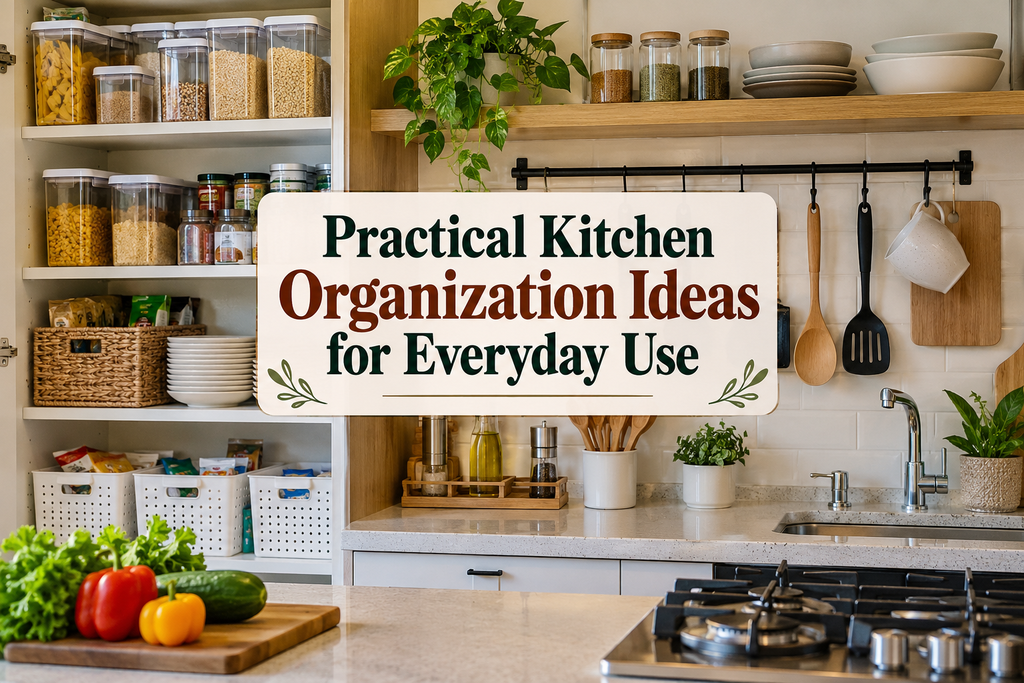
Keep Countertops as Clear as Possible
A kitchen often feels more organized when countertops are not crowded.
Look at every item currently sitting on the counter and ask whether it is used frequently enough to remain there.
A kettle or coffee machine used every day may deserve permanent counter space. An appliance used once a month probably does not.
Try to leave at least one clear area for food preparation.
A spacious work surface makes cooking more comfortable and also makes the kitchen easier to clean.
You can keep a small tray for frequently used items such as cooking oil, salt, or seasonings. Grouping them together creates a cleaner appearance than having individual products scattered across the counter.
Organize Pots and Pans Carefully
Pots and pans are often difficult to store because they take up significant space.
If possible, nest smaller pots inside larger ones. Place a protective layer between delicate cookware if scratching is a concern.
Pan lids can be stored separately using a vertical rack or cabinet door organizer.
Frequently used pans should be easier to access than cookware that is only used occasionally.
If you have deep lower cabinets, pull out baskets can make it easier to reach items stored at the back.
Use Cabinet Doors for Extra Storage
The inside of cabinet doors is often overlooked.
Small organizers can sometimes be attached to these surfaces for lightweight items such as measuring spoons, cleaning cloths, foil, or food storage bags.
However, avoid adding too much weight to cabinet doors.
The goal is to make use of otherwise empty space without making the cabinet difficult to close.
Under the sink, a door mounted holder can also provide a convenient place for sponges or cleaning gloves.
Improve Under Sink Organization
The cabinet below the kitchen sink often becomes a collection point for cleaning products.
Begin by removing products you no longer use. Keep only essential cleaning supplies.
Group similar products inside small baskets or containers. One basket could hold dishwasher supplies while another contains surface cleaning products.
A small plastic tray can protect the cabinet floor from minor spills.
Because plumbing takes up much of the space, stackable or narrow organizers can sometimes make better use of the remaining area.
For households with children or pets, cleaning chemicals should always be stored safely and securely.
Create a Simple Spice System
Spices are easier to use when you can quickly see what you have.
Arrange them alphabetically, by cuisine, or according to how often you use them. The best method is simply the one you can maintain.
A stepped spice organizer can make containers at the back easier to see.
Avoid keeping spices scattered in several locations. A single organized area helps prevent buying duplicates.
Check older spices occasionally because flavor can weaken over time.
Organize the Refrigerator
Kitchen organization should include the refrigerator because it is used throughout the day.
Try grouping similar foods together. Keep dairy products in one area, vegetables in drawers, condiments together, and prepared food on designated shelves.
Small refrigerator bins can help organize snacks, drinks, or smaller packages.
Avoid filling the refrigerator too tightly because good air circulation helps maintain consistent cooling.
It is also useful to create an area for foods that should be eaten soon. Leftovers or produce nearing the end of freshness can be placed there so they are not forgotten.
Keep Frequently Used Tools Visible
Not every kitchen tool needs to be hidden.
A container near the stove can hold frequently used wooden spoons, spatulas, and cooking utensils. A magnetic strip may provide convenient knife storage when installed correctly and safely.
Wall hooks can also hold lightweight utensils or kitchen towels.
Visible storage works best when it is limited to items you genuinely use often. Too many items displayed openly can make the kitchen feel cluttered.
Use Labels Where They Are Helpful
Labels can make kitchen organization easier, especially in shared households.
Pantry containers, freezer packages, storage baskets, and leftovers can all benefit from clear labels.
For homemade or frozen food, adding the preparation date is especially useful.
Labels do not need to be decorative or complicated. A simple handwritten label can be enough to prevent confusion.
The main purpose is practical organization, not creating a showroom appearance.
Create a Regular Reset Routine
Even the best kitchen organization system will gradually become messy if items are not returned to their proper places.
A short daily reset can make a big difference.
After dinner, put ingredients away, wash or load dishes, wipe countertops, and return misplaced items.
Once a week, quickly check the refrigerator for old food and straighten the pantry.
Once every few months, review cabinets and drawers for things that are no longer needed.
Small, regular maintenance is much easier than reorganizing the entire kitchen after clutter has accumulated.
Avoid Buying Too Many Organizers
Storage products can be helpful, but buying too many can create a new form of clutter.
Always organize your belongings before purchasing baskets, containers, racks, or dividers.
Measure cabinets and drawers carefully so that anything you buy actually fits.
Choose organizers that solve a specific problem.
For example, if baking trays constantly fall over, a vertical divider may be useful. If packets disappear in a deep pantry, a simple basket may solve the problem.
Good kitchen organization is about making the space practical, not filling it with storage accessories.
Give Every Item a Permanent Home
One of the most important principles of kitchen organization is giving every item a clear place.
When something does not have a permanent location, it usually ends up on the countertop, dining table, or inside a random drawer.
Decide where each category belongs and try to return items to the same place after use.
This habit makes cleaning easier because you do not have to decide where something belongs every time you put it away.
It also allows other household members to follow the same system.
Make Your Organization System Realistic
A perfectly arranged kitchen is not necessarily a practical kitchen.
Your organization system should be easy enough to maintain during busy days.
If storing an everyday appliance requires removing several other items first, you will probably stop putting it away.
If a food container system requires perfectly arranging every lid each time, it may become frustrating.
The best kitchen organization ideas are simple enough to become part of your normal routine.
Focus on convenience, accessibility, and easy maintenance rather than perfection.
Final Thoughts
Practical kitchen organization can make everyday cooking, cleaning, and meal preparation much more comfortable. You do not need a large kitchen or expensive storage system to create meaningful improvements.
Begin by removing items you no longer need. Then organize your kitchen into functional zones, keep frequently used items accessible, improve drawer and cabinet storage, and create simple systems for food, cookware, containers, and cleaning products.
Use vertical space wisely, keep countertops reasonably clear, and give every item a permanent home.
Most importantly, create an organization system that matches the way you actually use your kitchen.
A kitchen does not need to look perfect every moment. It simply needs to function well. When everything is easier to find, easier to use, and easier to put away, the kitchen becomes a more enjoyable and efficient part of everyday life.


