
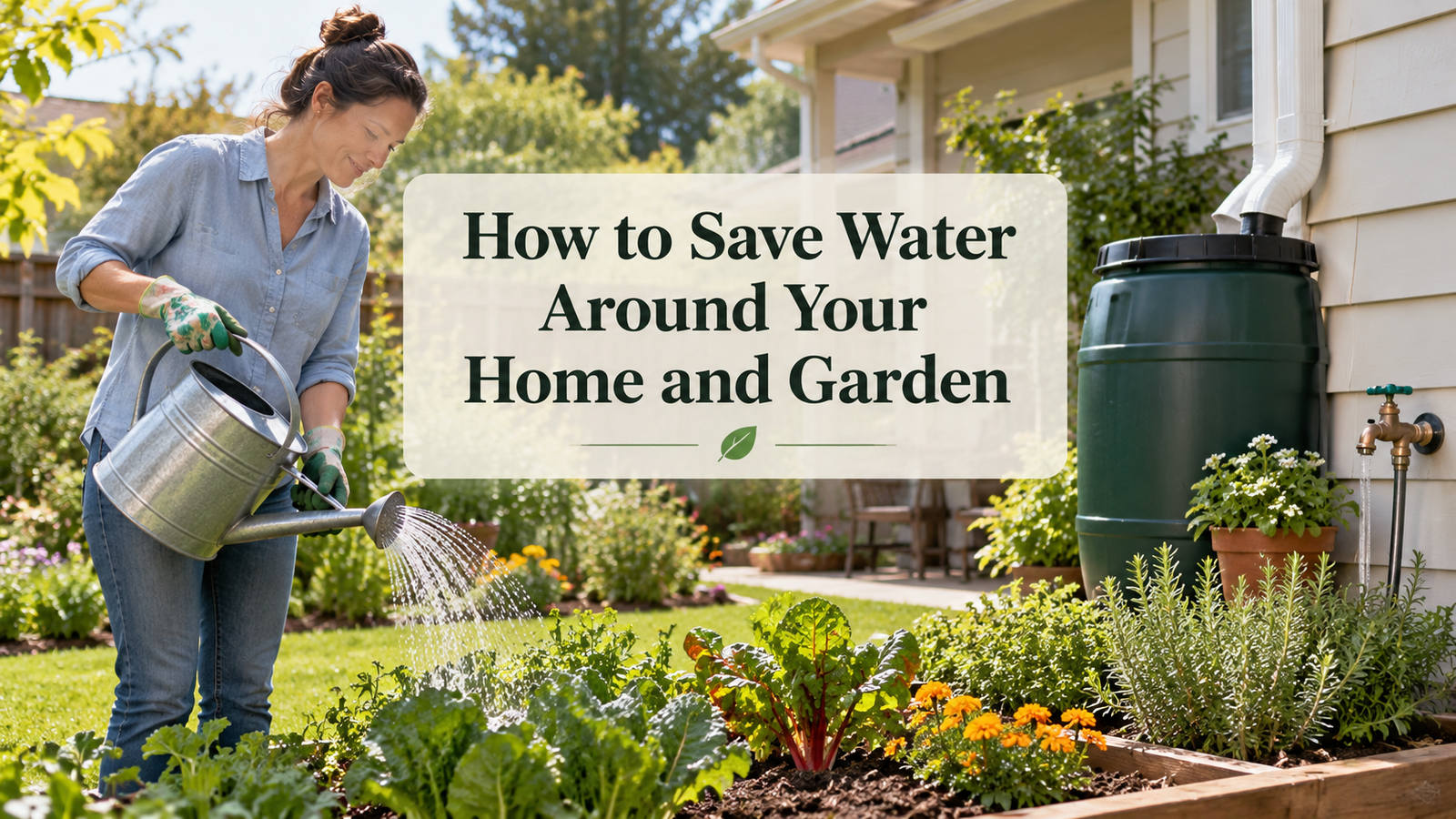
Water is one of the most valuable resources we use every day, yet it is surprisingly easy to waste without realizing it. From taking a shower in the morning to washing dishes, cleaning the house, watering plants, and maintaining a lawn, water is involved in almost every part of daily life. The good news is that learning how to save water around your home and garden does not require major lifestyle changes. Small and thoughtful habits can significantly reduce water consumption while keeping your home comfortable and your garden healthy.
Saving water is not only good for the environment. It can also help lower household utility costs and make your property easier to manage. When water is used carefully, less energy is needed for pumping, heating, and treating it. In the garden, efficient watering can even improve plant health because plants receive moisture where and when they actually need it.
Understand Where Water Is Being Used
The first step in saving water at home is understanding where most of it goes. Bathrooms, kitchens, laundry areas, outdoor taps, lawns, and gardens are usually the main places where households use water.
You do not need complicated equipment to understand your habits. Simply pay attention to how long taps are left running, how frequently the washing machine is used, and how much water is applied to your garden.
Once you become aware of everyday water use, it becomes much easier to identify areas where small improvements can make a noticeable difference.
Repair Leaking Taps Quickly
A dripping tap may appear harmless, but a continuous leak can waste a considerable amount of water over time. It is easy to ignore a few drops because they seem insignificant. However, when dripping continues day and night, the total waste can become surprisingly large.
Check kitchen taps, bathroom taps, outdoor faucets, toilet systems, and pipes regularly. Look for moisture underneath sinks and around plumbing connections.
Fixing leaks early also helps protect your property from water damage. A small plumbing problem can sometimes develop into a much larger repair if it is ignored for too long.
Turn Off the Tap When It Is Not Needed
One of the simplest ways to save water around your home is to avoid leaving taps running unnecessarily.
For example, the tap does not need to stay on continuously while brushing your teeth. You can wet your toothbrush, turn off the water, brush your teeth, and then turn it back on when rinsing.
The same idea can be used while shaving, washing your face, or cleaning certain household items. These small habits may only save a little water each time, but they happen frequently enough to make a meaningful difference over the course of a year.
Take Shorter Showers
Showers are another major source of household water consumption. Reducing shower time by even a few minutes can help conserve water without affecting personal hygiene.
Try focusing on what you actually need to do rather than standing under running water longer than necessary.
A water efficient showerhead can also help. Modern designs can provide comfortable water pressure while using less water than older showerheads.
The goal is not to make showers uncomfortable. It is simply to make them more efficient.
Use the Washing Machine Efficiently
Laundry can consume a significant amount of water, especially in a busy household. One practical way to reduce this consumption is to avoid running the washing machine for only a few clothes.
Whenever possible, wait until you have enough laundry for a suitable load. This allows you to clean more clothing with the same washing cycle.
If your washing machine offers different water levels or eco settings, choose a setting that matches the size of the load.
When purchasing a new washing machine in the future, consider looking for a water efficient model. Efficient appliances can reduce both water and energy consumption.
Save Water While Washing Dishes
Washing dishes under a continuously running tap can use much more water than necessary.
When washing dishes by hand, remove leftover food first. Fill the sink or a container with enough water for washing rather than leaving the tap running throughout the entire process.
If you have a dishwasher, try running it only when it has a full load. A half empty dishwasher may use almost the same washing cycle while cleaning far fewer items.
Developing a simple dishwashing routine can make kitchen water use much more efficient.
Keep Drinking Water in the Refrigerator
Some people allow the tap to run until the water becomes cold enough to drink. This can waste several glasses of clean water each time.
A simple solution is to keep a bottle or jug of drinking water in the refrigerator. Cold water will then be available immediately without needing to run the tap.
It is a small adjustment, but it is an excellent example of how water conservation can become part of normal household routines.
Be Careful When Cleaning Outdoor Areas
Driveways, patios, pathways, and outdoor floors sometimes need cleaning, but using a hose for every cleaning job can waste large amounts of water.
For light dirt, leaves, and dust, a broom may be all you need.
If an area genuinely needs washing, use water carefully and focus only on the dirty sections rather than spraying the entire surface for a long period.
A bucket and brush can also provide better control over the amount of water being used.
Water Your Garden at the Right Time
Garden watering is one of the most important areas to consider when trying to save water around your home and garden.
The time of day can affect how much water reaches your plants. Watering during the hottest part of the day may cause some moisture to evaporate before plants can use it.
Early morning is often a practical time for watering because temperatures are usually cooler and the soil has time to absorb moisture.
Watering plants efficiently means providing enough moisture to reach their roots without flooding the surrounding area.

Water the Soil Instead of the Leaves
Plants absorb most of their water through their roots. This means spraying large amounts of water over leaves is often unnecessary.
Direct water toward the soil around the base of each plant. This helps moisture reach the root zone more efficiently.
Slow watering can also be useful because it gives the soil time to absorb water rather than allowing it to run across the surface.
Using a watering can, soaker hose, or carefully positioned irrigation system can help deliver water exactly where it is needed.
Use Mulch Around Garden Plants
Mulch is one of the simplest tools for creating a more water efficient garden.
A layer of organic material around plants can reduce moisture loss from the soil. It also helps protect the soil from strong sunlight and can limit weed growth.
Common organic mulch materials include bark, wood chips, shredded leaves, compost, and straw.
Spread mulch around plants while leaving a small amount of space around stems and trunks. This simple gardening practice can help the soil stay moist for longer periods, which means you may not need to water as frequently.
Improve the Quality of Your Soil
Healthy soil is extremely important for water conservation.
Soil that contains enough organic matter can often hold moisture more effectively while still allowing excess water to drain away. Poor soil may become dry quickly or allow water to run away before plants can benefit from it.
Adding compost is one of the easiest ways to improve garden soil naturally. Compost can improve soil structure while also providing nutrients for plants.
Over time, healthier soil can reduce the amount of watering your garden requires.
Choose Plants That Suit Your Climate
Plant selection has a major influence on garden water use.
Plants that are naturally suited to local weather conditions are usually easier to maintain than plants that constantly require special care.
Before purchasing new plants, consider their sunlight, soil, temperature, and water requirements. Group plants with similar watering needs together whenever possible.
This makes watering easier because you can provide each section of the garden with the appropriate amount of moisture rather than watering everything equally.
A carefully planned garden can remain attractive without requiring excessive water.
Avoid Overwatering Plants
More water does not always mean healthier plants.
Overwatering can create several problems. Plant roots may struggle when the soil remains wet for too long, and certain plant diseases can develop more easily in constantly damp conditions.
Before watering, check the soil. Insert your finger a short distance into the ground near the plant. If the soil still feels moist, watering may not be necessary yet.
Learning to judge soil moisture is one of the most useful skills for anyone who wants a healthy and water efficient garden.
Collect Rainwater When Possible
Rainwater can provide a useful natural water source for gardens.
Where appropriate and permitted, rain barrels or other suitable collection systems can capture water from rainfall for later garden use.
Collected rainwater may be useful for watering flowers, shrubs, vegetables, and other outdoor plants.
Make sure containers are properly covered and maintained so they do not become unsafe or attract pests.
Even a relatively simple rainwater collection method can reduce dependence on treated household water during suitable seasons.
Review Your Lawn Watering Habits
Lawns can require large amounts of water, particularly during warm weather. However, frequent shallow watering is not always the best approach.
Depending on the grass type, soil, climate, and season, deeper watering at appropriate intervals may encourage stronger roots.
Check the lawn before turning on sprinklers. If the soil is already moist or rain is expected, additional watering may not be needed.
Sprinklers should also be positioned carefully. Watering pavement, walls, or driveways provides no benefit to the grass.
Adjusting sprinkler direction can immediately reduce unnecessary water loss.
Reduce Unnecessary Lawn Areas
A large lawn can be attractive, but maintaining grass often requires regular watering.
If certain lawn areas are rarely used, consider whether some of the space could be replaced with garden beds, suitable ground cover, pathways, seating areas, or drought tolerant plants.
You do not need to remove the entire lawn. Even reducing a small section can lower the amount of water required for outdoor maintenance.
Designing the garden around how the space is actually used can make it both attractive and efficient.
Check Your Irrigation System Regularly
Automatic irrigation systems are convenient, but they still need attention.
Inspect sprinkler heads, hoses, connectors, and irrigation pipes for leaks or damage. A broken sprinkler head can waste a large amount of water before the problem is noticed.
Make sure irrigation systems are watering plants rather than nearby pavement.
Seasonal adjustments are also important. Plants usually do not require exactly the same amount of water throughout the year.
Changing irrigation schedules according to weather conditions can prevent unnecessary watering.
Reuse Water When It Is Safe and Practical
Some household water can occasionally be reused rather than immediately discarded.
For example, clean water used to rinse certain fruits and vegetables may sometimes be collected and used on suitable garden plants.
Water left in a drinking glass can also be poured into a plant pot instead of being thrown into the sink.
However, use common sense when reusing household water. Water containing harmful cleaning chemicals, excessive salt, grease, or other unsuitable substances should not be applied to plants.
The purpose is to reuse safe water thoughtfully rather than transferring household waste into the garden.
Teach Everyone in the Household to Save Water
Water conservation becomes much more effective when everyone participates.
Talk with family members about simple habits such as turning off taps properly, reporting leaks, avoiding unnecessary hose use, and taking reasonable showers.
Children can also learn basic water saving habits from an early age. Simple explanations can help them understand that clean water should not be wasted.
When everyone follows the same approach, saving water becomes part of normal household life rather than an occasional effort.
Make Water Conservation a Daily Habit
The best water saving strategy is one that you can maintain for years.
You do not need to make every change at once. Start with simple improvements such as fixing leaks, turning off taps when they are not needed, watering the garden carefully, and running appliances with appropriate loads.
After these habits become normal, you can consider larger improvements such as better irrigation systems, efficient appliances, rainwater collection, improved soil, and water conscious landscaping.
Consistency is more valuable than trying to achieve perfection.
Final Thoughts
Learning how to save water around your home and garden is mainly about using water with greater awareness. Many of the most effective methods are surprisingly simple. Repairing leaks, shortening showers, using appliances efficiently, improving garden soil, applying mulch, checking soil moisture, and watering plants at the right time can all reduce unnecessary water consumption.
A water efficient home does not have to feel restrictive, and a water efficient garden does not have to look dry or unattractive. In fact, thoughtful water management can lead to healthier plants, easier maintenance, lower household expenses, and a more sustainable lifestyle.
Every drop saved may seem small on its own, but everyday habits are repeated hundreds of times throughout the year. When those habits become more efficient, the total amount of water saved can be significant. By making practical changes indoors and outdoors, you can protect this valuable resource while still enjoying a comfortable home and a beautiful garden.


