

A small patio may not offer a huge amount of space, but it can still become one of the most enjoyable areas of a home. With thoughtful planning, comfortable furniture, natural elements, and a little creativity, even a compact outdoor area can feel welcoming and practical. I have always found that the best small patio design ideas are not about filling every corner. They are about using the available space wisely and creating an environment where you actually want to spend time.
When designing a small patio, every detail matters. The furniture you choose, the way you arrange plants, the lighting, the colors, and even the flooring can affect how large and comfortable the space feels. The goal should be to create a patio that looks attractive without becoming crowded.
Start With a Clear Purpose
Before buying furniture or decorations, think about how you want to use your patio. This simple decision can make the entire design process easier.
Some people want a quiet place where they can drink tea, read a book, or enjoy the morning air. Others may want a small outdoor dining area for family meals. You may also want your patio to become a comfortable place for conversations with friends.
Trying to create several different areas in a very small space can quickly make it feel cluttered. Instead, choose one main purpose and design around it.
For example, if relaxation is your priority, two comfortable chairs and a small side table may be enough. If outdoor dining is more important, a compact table with folding chairs could work better.
A clear purpose helps you avoid unnecessary furniture and keeps the patio organized.
Choose Furniture That Fits the Space
Furniture is usually the largest element on a patio, so choosing the right size is important.
Large outdoor sofas may look beautiful in a showroom, but they can dominate a small patio. Compact chairs, benches, stools, and small tables are often better choices.
Before purchasing anything, measure the patio carefully. Leave enough space for people to walk around comfortably. Furniture should never make the area difficult to enter or leave.
A small round table can work especially well because it takes up less visual space and has no sharp corners. A narrow rectangular table can also fit nicely against a wall.
Lightweight furniture is another practical option. Chairs and tables that are easy to move allow you to change the arrangement whenever needed.
Use Multifunctional Furniture
One of the smartest small patio design ideas is choosing furniture that can serve more than one purpose.
A storage bench, for example, provides seating while also offering a place to keep cushions, gardening tools, or outdoor accessories.
A stool can work as a seat, a plant stand, or a small table. An outdoor ottoman can provide extra seating and can also become a place to rest your feet.
Folding furniture is especially useful in compact areas. When you need more floor space, you can simply fold the furniture and store it against a wall.
Multifunctional pieces reduce clutter and help you get more value from every part of the patio.
Take Advantage of Vertical Space
When floor space is limited, look upward.
Walls, fences, and railings provide valuable decorating opportunities without taking up walking space. Vertical gardening is one of my favorite ways to make a small patio feel greener.
Wall mounted planters can hold herbs, flowers, or small decorative plants. Hanging baskets can bring color to higher areas of the patio. A simple wooden plant ladder can also allow several pots to be displayed in a narrow area.
Climbing plants can be trained along a trellis attached to a wall or fence. Over time, they can create a beautiful natural background while also adding some privacy.
Using vertical space makes the patio look fuller without making the floor feel crowded.
Create a Green Corner
Plants can completely change the atmosphere of a patio.
You do not need dozens of plants to make an impact. A few carefully selected containers can create a peaceful outdoor environment.
Try grouping pots of different heights together in one corner. Place taller plants behind smaller ones to create depth. This arrangement usually looks more organized than spreading individual pots across the entire patio.
Choose containers that work well with the overall style of your home. Terracotta pots can create a warm and natural appearance, while simple ceramic containers can provide a cleaner look.
If you enjoy cooking, consider growing herbs such as basil, mint, parsley, rosemary, or thyme. They add greenery while also providing fresh ingredients for meals.
Keep the Color Palette Simple
Too many colors can make a small patio feel busy.
Using a simple color palette creates visual calm and can make the space appear more open. Neutral shades such as white, cream, beige, light gray, and natural wood tones work particularly well in compact outdoor areas.
You can then introduce stronger colors through cushions, flowers, small rugs, or decorative accessories.
Green plants already provide plenty of natural color, so you often need only one or two additional accent colors.
For example, neutral furniture with green plants and blue cushions can create a fresh and relaxing appearance without overwhelming the space.
Add an Outdoor Rug
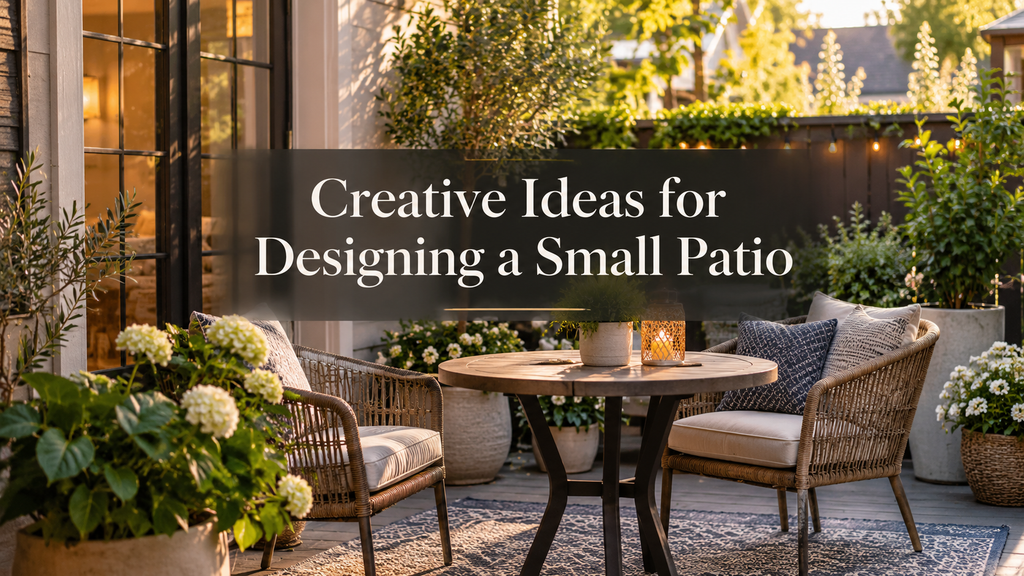
An outdoor rug is an easy way to make a patio feel more comfortable.
It can visually define the seating area and make outdoor furniture feel more connected. A rug also adds texture and can hide unattractive patio flooring.
Choose a rug that is designed for outdoor conditions so it can handle moisture and changing weather.
Patterns can work well, but avoid designs that are extremely busy if the patio is very small. Simple geometric patterns or natural textures often create a balanced appearance.
Make sure the rug is appropriately sized. A rug that is too large can make the space feel smaller, while one that is too tiny may look disconnected from the furniture.
Improve the Patio With Comfortable Lighting
Good lighting allows you to enjoy your patio after sunset and creates a warmer atmosphere.
String lights are popular because they provide soft lighting without taking up floor space. They can be attached to walls, fences, or overhead supports.
Solar powered lights are another useful option. They are easy to install and do not require complicated wiring.
Small lanterns can be placed on tables or in corners. Battery powered candles can also create a peaceful evening environment without the safety concerns of open flames.
Avoid using very bright lighting everywhere. Small patios often look better with several soft light sources rather than one powerful light.
Add Privacy Without Closing the Space
Privacy can make a patio much more comfortable, particularly in homes where outdoor areas are close to neighboring properties.
However, completely enclosing a small patio may make it feel dark and restricted.
A better approach is to create partial privacy.
Tall plants in containers can form a natural screen while still allowing air and light to move through the space. Bamboo screens or decorative wooden panels can also provide privacy without requiring permanent construction.
Outdoor curtains are another flexible option. They can be opened when you want more light and closed when additional privacy is needed.
The goal is to create a comfortable sense of separation without making the patio feel like a closed room.
Use Mirrors Carefully
Mirrors are often used indoors to make rooms appear larger, and the same idea can sometimes work outdoors.
A weather resistant mirror placed on a protected patio wall can reflect plants and natural light, creating an impression of greater depth.
The position of the mirror is important. Ideally, it should reflect something attractive such as greenery, flowers, or an interesting section of the garden.
Avoid placing a mirror where it receives strong direct sunlight for long periods. It should also be installed securely so that wind cannot move it.
Used correctly, a mirror can become both a decorative feature and a clever visual trick.
Make the Flooring Part of the Design
Patio flooring can influence the entire appearance of the outdoor space.
If the existing surface is plain concrete, you do not necessarily need to replace it. Outdoor rugs, removable deck tiles, or suitable outdoor coatings can give the floor a fresh appearance.
Wood effect deck tiles can bring warmth to a small patio and are often easier to install than traditional decking.
Natural stone has a timeless appearance, while simple concrete can work beautifully in modern designs when combined with attractive furniture and plants.
Whatever flooring you choose, make sure it is durable, easy to clean, and suitable for outdoor conditions.
Create a Small Focal Point
Every attractive space benefits from having something that naturally catches the eye.
On a small patio, the focal point should be simple rather than oversized.
It might be a beautiful plant in a large pot, an interesting piece of wall decoration, a small water feature, or a colorful chair.
A focal point gives the patio personality and helps the design feel intentional.
For example, a large leafy plant placed in one corner can immediately create visual interest. You can then keep the remaining decorations simple so that the area does not become overcrowded.
Consider Built In Seating
Built in seating can be extremely useful when designing a small patio.
A bench placed along a wall uses space efficiently and often provides more seating than several separate chairs.
If possible, design the bench with storage underneath. This gives you a convenient place for outdoor cushions, small tools, or other items that would otherwise create clutter.
Add comfortable cushions to make the seating more inviting.
Built in seating also creates a cleaner appearance because it follows the shape of the patio rather than interrupting the available floor space.
Bring Indoor Comfort Outdoors
One reason some patios remain unused is that they feel too basic.
Adding a few comfortable elements can make the area feel more inviting.
Outdoor cushions, soft seat pads, weather resistant rugs, small blankets, and decorative pillows can make patio furniture much more comfortable.
The key is choosing materials designed for outdoor use. Indoor fabrics may fade or become damaged when exposed to sunlight and moisture.
Think of the patio as an extension of your home. It does not need to look exactly like an indoor room, but it should provide a similar sense of comfort.
Avoid Too Many Decorations
Decorating a small patio can be enjoyable, but it is easy to add too much.
A large collection of pots, ornaments, lanterns, furniture pieces, and wall decorations can make the patio feel smaller than it actually is.
Instead, choose a limited number of items that you genuinely like.
One beautiful planter may create more impact than six small decorations. A single group of cushions can add enough color without requiring many additional accessories.
Leaving some empty space is important. Open areas give the eyes somewhere to rest and make the patio feel more spacious.
Keep the Patio Easy to Maintain
A beautiful patio should also be practical.
If maintaining the space requires constant work, you may eventually stop using it. Choose materials, plants, and furniture that fit your lifestyle.
If you have limited time for gardening, select plants that do not require daily attention. Choose furniture that can be cleaned easily and fabrics that resist fading and moisture.
Storage is also important. Having a simple place for cushions and small accessories keeps the patio looking tidy.
Regular sweeping, occasional furniture cleaning, and basic plant care are usually enough to keep a well designed patio attractive.
Final Thoughts
Designing a small patio is mainly about making thoughtful choices. Limited space does not mean you have to sacrifice comfort, beauty, or personality. In many cases, a smaller outdoor area can actually feel more welcoming because every detail is carefully considered.
Start by deciding how you want to use the space. Choose appropriately sized furniture, use vertical areas for plants, introduce soft lighting, and keep your color palette simple. Multifunctional furniture, smart storage, natural greenery, and a few comfortable accessories can make a remarkable difference.
The most successful small patio design is not necessarily the one with the most expensive furniture or decorations. It is the one that feels comfortable, organized, and suited to your daily life.
With a little creativity and careful planning, even the smallest patio can become a peaceful outdoor retreat where you can relax, enjoy fresh air, and spend more time outside.


