
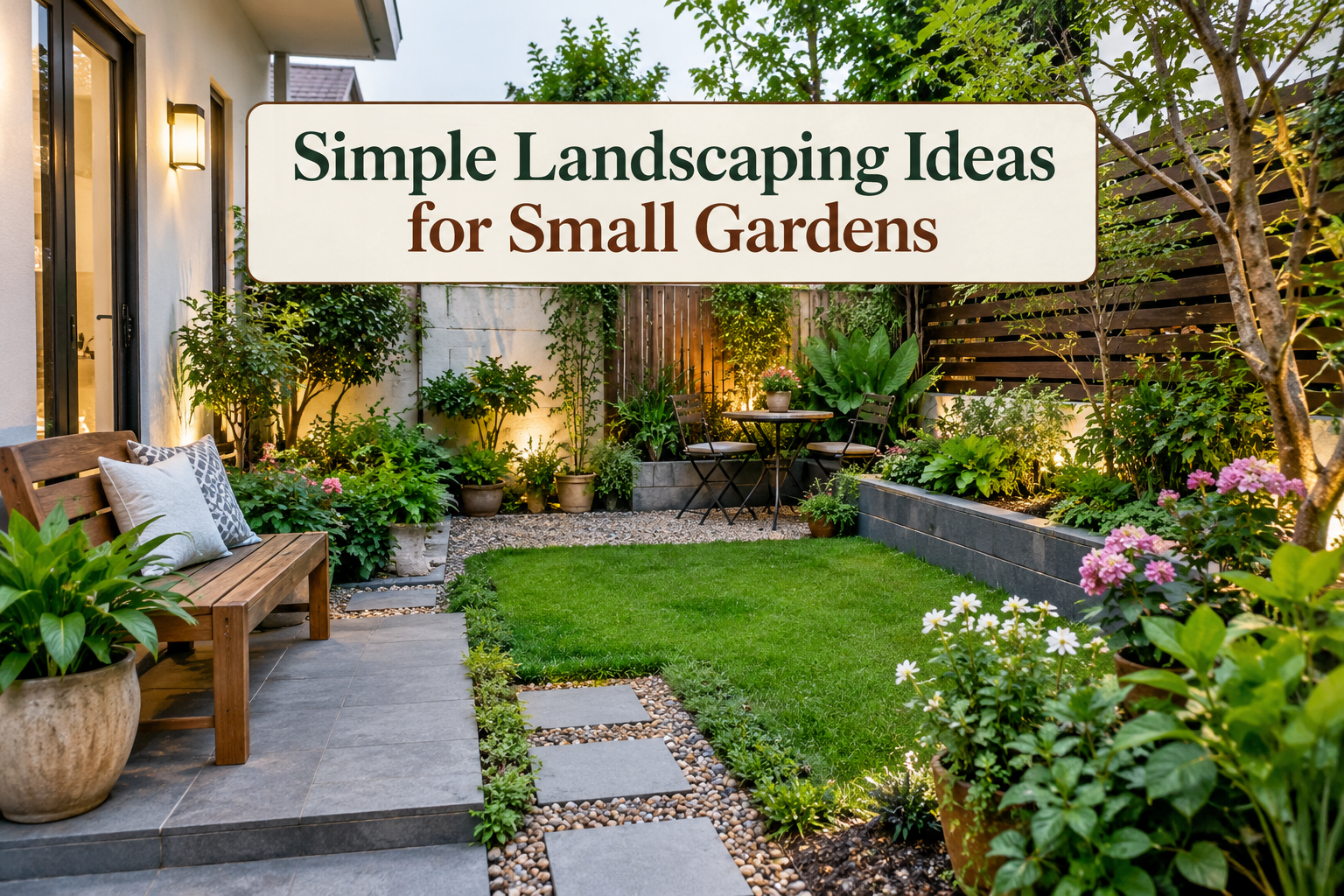
A small garden may have limited space, but it can still become one of the most beautiful and relaxing areas of your home. In fact, working with a smaller outdoor space often encourages better planning because every plant, pathway, container, and decorative feature needs a purpose. With a few simple landscaping ideas for small gardens, you can create an outdoor area that feels organized, fresh, comfortable, and surprisingly spacious.
When I think about landscaping a small garden, I believe the most important step is not trying to fit too much into the available space. A successful small garden usually has a clear design, carefully selected plants, and enough open space to allow the garden to breathe. The goal is not to fill every corner. The goal is to make every corner useful and attractive.
Start With a Simple Garden Plan
Before planting anything, take some time to study your garden. Notice where sunlight falls during different parts of the day. Look at areas that remain shaded and think about how you normally use the outdoor space.
A simple plan can prevent many landscaping mistakes.
Decide whether you want the garden mainly for relaxation, flowers, vegetables, entertaining, or a combination of different purposes. Once you know what you expect from the garden, choosing the right landscaping features becomes much easier.
Try dividing the space into small sections. One section could contain seating, another could contain flowers, and a sunny corner could be used for herbs or vegetables. Even a very small garden feels more organized when different areas have clear purposes.
Use Vertical Space for Plants
One of the best landscaping ideas for small gardens is to grow upward instead of using only the ground.
Walls, fences, trellises, and railings provide valuable growing space that is often ignored. Climbing plants can cover bare walls and make a small garden feel greener without taking up much floor space.
You can also install wall mounted planters or use shelves for small pots. Herbs, flowering plants, and compact ornamental plants work especially well in vertical gardens.
A simple wooden trellis with a climbing plant can create a beautiful natural feature. It can also provide privacy when the garden is close to neighboring properties.
Vertical gardening is especially useful when you want plenty of plants but still need enough space for walking and seating.
Choose Plants That Suit the Available Space
Plant selection makes a major difference in small garden landscaping.
Large trees and fast growing shrubs can quickly overwhelm a limited area. Compact plants are usually a better choice because they provide greenery without making the garden feel crowded.
Before buying a plant, learn about its mature height and width. A small plant at the garden center may eventually become several times larger.
Look for plants that provide long lasting value. Evergreen shrubs can add structure throughout the year, while flowering plants bring seasonal color. Herbs can provide both beauty and practical use.
Combining different types of plants creates variety without requiring a large amount of space.
Create an Attractive Focal Point
Every garden benefits from having something that attracts attention.
In a small garden, one strong focal point is often better than several competing decorations. It gives the landscape a clear visual direction and can make the overall design feel more intentional.
A focal point might be a beautiful planter, a small tree, a decorative pot, a garden sculpture, or a simple water feature.
You could also use a brightly flowering plant as the main attraction.
Place the focal point where it can be easily seen from the house or from the main seating area. Avoid adding too many decorative objects around it because this can make a small garden look cluttered.
Add a Simple Garden Path
A pathway can make even a tiny garden feel more interesting.
Instead of seeing the entire garden at once, a path encourages the eye to follow a direction. This creates a sense of movement and can make the space appear larger.
You do not need an expensive paved walkway. Stepping stones, bricks, gravel, or natural stone can create a simple and attractive path.
A slightly curved path often works well because it adds softness to the garden design. Surrounding the pathway with low growing plants can make it feel naturally connected to the landscape.
Make sure the path remains wide enough for comfortable walking.
Use Containers to Increase Flexibility
Container gardening is one of the easiest ways to improve a small outdoor space.
Pots allow you to grow flowers, herbs, vegetables, ornamental grasses, and even small shrubs without creating permanent planting beds. They can also be moved whenever you want to change the garden layout.
Choose containers in different sizes but try to maintain some visual consistency. Using similar materials or complementary shapes can prevent the garden from looking messy.
Large containers can create stronger visual impact than many tiny pots. A few carefully positioned containers usually look more organized and are easier to maintain.
Remember that plants growing in containers often need more regular watering because the soil dries faster than soil in the ground.
Create Different Levels
A completely flat garden can sometimes look smaller than it really is.
Adding different heights creates depth and gives the landscape more visual interest.
You can achieve this by using raised planting beds, tall containers, plant stands, or plants with different mature heights.
Place taller plants toward the back of planting areas and shorter plants toward the front. This allows each plant to remain visible and creates a natural layered appearance.
Raised beds are particularly useful in small gardens. They create clear planting zones and make it easier to manage soil quality.
Keep the Color Scheme Simple
Color is important in garden design, but too many colors can make a limited space feel busy.
Choosing a simple color scheme often creates a calmer and more spacious appearance.
For example, you might use plants with white, purple, and green tones throughout the garden. Another garden might focus on warmer shades such as yellow, orange, and red.
Repeating similar colors in different areas creates visual connection.
This does not mean every flower needs to match. Natural variety is part of the beauty of gardening. The idea is simply to avoid adding every available color without considering how they work together.
Add Comfortable Seating
A garden becomes much more enjoyable when you have somewhere to sit and appreciate it.
For a small garden, choose furniture that matches the scale of the space. Large outdoor sofas or oversized tables can quickly dominate the area.
A small bench, two chairs, or a compact table may be enough.
Placing seating against a wall or fence can leave the center of the garden open. This often makes the space feel larger.
If possible, position the seating where you can enjoy an attractive view of your plants or focal point.
Comfort is just as important as appearance. A beautifully landscaped garden should also be a place where you actually want to spend time.

Use Garden Lighting Carefully
Outdoor lighting can completely change the atmosphere of a small garden after sunset.
Soft lighting is usually more effective than very bright lights. Small solar lights along a pathway can improve visibility while creating a welcoming appearance.
You can also use wall lights, lanterns, or outdoor string lights around a seating area.
Consider highlighting one important feature, such as a small tree or textured wall.
Good lighting adds depth to the landscape and allows you to enjoy the garden during the evening.
Avoid placing lights everywhere. A few carefully positioned lights can create a better effect than excessive lighting.
Make Boundaries More Attractive
Fences and walls often occupy a large part of the view in small gardens, so their appearance matters.
Instead of treating them only as boundaries, include them in the landscaping design.
You can paint a fence in a simple natural shade, grow climbing plants against it, or hang a few carefully positioned planters.
Mirrors are sometimes used on garden walls to create the illusion of additional space. However, they should be positioned thoughtfully and securely.
Greenery is often the simplest way to soften hard boundaries and create a more natural atmosphere.
Include Herbs and Edible Plants
Small gardens do not need to be purely decorative.
Many edible plants are attractive enough to become part of the landscaping. Herbs such as rosemary, basil, thyme, mint, and parsley can provide fresh ingredients while adding color and texture.
Some vegetables can also grow successfully in containers or raised beds.
Growing edible plants gives your garden an additional purpose. Walking outside and picking fresh herbs for cooking can make even a small garden feel valuable.
Just make sure you understand the sunlight and watering needs of each plant before deciding where to place it.
Use Ground Cover Plants
Ground cover plants can be useful where grass is difficult to maintain or where you want to fill small gaps between larger plants.
Low growing plants can soften the edges of pathways and planting beds while reducing the amount of exposed soil.
They may also help reduce weeds by covering available ground.
Choose ground covers carefully because some varieties spread very quickly. A plant that looks manageable at first may eventually take over nearby areas.
Select varieties suitable for your climate and the amount of sunlight available in your garden.
Keep the Garden Easy to Maintain
A beautiful landscape should not become a constant source of work.
Small gardens are often easier to maintain, but poor planning can still create unnecessary tasks.
Choose plants that are suitable for your local growing conditions. Plants that naturally adapt to your climate usually need less attention than plants requiring special care.
Mulching around plants can help the soil retain moisture and reduce weed growth. Regular pruning can also prevent shrubs and climbing plants from becoming too large.
Keep gardening tools organized and remove dead leaves or damaged plants regularly. Small amounts of maintenance performed frequently are usually easier than allowing several jobs to build up.
Avoid Overcrowding the Garden
One of the most common mistakes in small garden landscaping is planting too much.
Empty space is not wasted space.
Plants need room to grow, and open areas allow individual features to stand out. When every section is filled with pots, decorations, furniture, and plants, the garden can feel smaller and more difficult to maintain.
Think about how plants will look after several years, not only when they are newly planted.
Leaving enough space between plants improves air circulation and gives the landscape a cleaner appearance.
Repeat Plants and Materials
Repetition is a simple technique that can make a small garden look professionally designed.
Instead of using a completely different plant in every corner, repeat a few favorite varieties throughout the space.
You can do the same with materials.
For example, if you use natural stone around one planting area, consider using the same material for part of the garden path. If you choose wooden planters, repeating wood in the seating area can create visual harmony.
Consistency helps separate features feel like parts of one complete garden.
Bring Nature Closer to the House
Small gardens are often viewed from inside the home, so consider how the landscape looks through windows and doors.
Place attractive plants where they can be seen from frequently used rooms.
A flowering container outside a kitchen window or a small tree visible from the living room can bring nature closer to everyday life.
This approach also helps you enjoy the garden during bad weather or when you do not have time to sit outside.
Final Thoughts
Creating a beautiful garden does not depend on having a large amount of land. Good planning is far more important than size. Simple landscaping ideas for small gardens can transform an ordinary outdoor area into a comfortable and attractive place for relaxing, gardening, and enjoying nature.
Start by understanding the available space and deciding how you want to use it. Choose compact plants, use vertical surfaces, add containers, create different levels, and keep the overall design simple. A clear pathway, comfortable seating, attractive boundaries, and carefully selected lighting can improve both appearance and functionality.
Most importantly, allow the garden to develop gradually. You do not need to complete every part of the landscape at once. Plants grow, seasons change, and your preferences may change as you spend more time outdoors.
A small garden designed with care can feel surprisingly spacious. When every plant and feature has a purpose, even the smallest outdoor area can become a peaceful and beautiful extension of your home.


